

 English
 中文简体
 Español


Jiangsu Mingchanghe Technology Co., Ltd.
Jiangsu Mingchanghe Technology Co., Ltd.
Jiangsu Mingchanghe Technology Co., Ltd.
Jiangsu Mingchanghe Technology Co., Ltd.
Jiangsu Mingchanghe Technology Co., Ltd.
Jiangsu Mingchanghe Technology Co., Ltd.
Jiangsu Mingchanghe Technology Co., Ltd.
Jiangsu Mingchanghe Technology Co., Ltd.
Jiangsu Mingchanghe Technology Co., Ltd.
Jiangsu Mingchanghe Technology Co., Ltd.
Jiangsu Mingchanghe Technology Co., Ltd.
Jiangsu Mingchanghe Technology Co., Ltd.
Jiangsu Mingchanghe Technology Co., Ltd.
Jiangsu Mingchanghe Technology Co., Ltd.
Jiangsu Mingchanghe Technology Co., Ltd.
09 Oct 2026, Posted by MCH
PC Plastic Sheets: Thickness, Tolerance, UV Grade and Incoming Quality Guide
Content
Three millimetres of polycarbonate will absorb a hammer strike that shatters an acrylic pane of the same thickness. That single property is why PC plastic sheets sit behind machine guards, bus shelters, safety visors, EV battery covers and medical device housings, and why buyers who order "clear 3 mm sheet" by thickness alone sometimes receive something that is not polycarbonate at all.
The difference between a good PC sheet and a disappointing one rarely shows up in the first week. It shows up eighteen months later, when a guard has yellowed, a thermoformed cover has bubbled, or a bracket has cracked around a fastener. This guide covers the numbers that control those outcomes, the tolerances worth writing into a purchase order, and the checks that catch a bad batch before it reaches the line.
What PC Plastic Sheets Actually Are
PC plastic sheets are rigid panels extruded from polycarbonate resin, an amorphous thermoplastic built from bisphenol A and phosgene, and supplied either as monolithic solid sheet or as coextruded sheet with a UV-absorbing cap layer.
Definition: a PC plastic sheet is a transparent or pigmented panel with a density near 1.20 g/cm3, light transmission of 87 to 90 percent at 3 mm in the clear grade, and a notched impact strength roughly two hundred times that of glass at the same thickness.
The extrusion line matters more than most buyers expect. Polycarbonate is dried to below 0.02 percent moisture and melted between 280 and 310 C before it passes through polished chrome rolls that set the surface finish. Sheet that is over-dried or run too hot still passes a visual inspection, but it carries residual stress that reappears as warping, crazing or a brittle break at a fixing point.
PC is also easy to confuse with three cheaper transparent plastics:
- Acrylic (PMMA) is harder and clearer, but brittle, so it cracks rather than dents on impact.
- PETG thermoforms into deep draws easily, yet it softens near 70 C and scratches readily.
- Unmodified polystyrene is the cheapest option and the weakest outdoors, yellowing inside a single season.
If a quotation for clear 3 mm sheet lands far below the polycarbonate market, one of those three is usually what is being offered.
The Numbers That Decide a Specification
Five numbers decide whether a PC sheet survives its application: gauge with tolerance, notched impact strength, heat deflection temperature, UV cap thickness, and light transmission.
600 to 900 J/mNotched Izod impact at 3.2 mm
115 CPractical continuous service limit
88 to 90 percentLight transmission, 3 mm clear
1.20 g/cm3Density measured at 23 C
| Density | 1.19 to 1.21 g/cm3 | Drives freight and handling; a 2050 x 3050 mm sheet at 3 mm weighs about 22 kg |
| Notched Izod impact | 600 to 900 J/m | Ductile failure instead of shattering; always confirm the test method |
| Tensile strength at yield | 60 to 70 MPa | Sets fastener loads; design to one third of yield for permanent loads |
| Heat deflection temperature | 128 to 135 C at 1.82 MPa | Marks where the part stops carrying load on its own |
| Light transmission | 87 to 90 percent at 3 mm | A rise in haze is the first sign of a failing UV layer |
| Thermal expansion | 65 to 70 microns per metre per Kelvin | A 3 m panel moves roughly 2 mm over a 40 C swing |
Ask for those values on a certificate of analysis tied to a batch number. A data sheet that lists properties without naming test methods is a marketing document, not a specification.
PC Sheet or PC/ABS Alloy Sheet
Choose straight PC when clarity and peak impact resistance decide the part. Choose a PC/ABS alloy when you need easier forming, a matte or heavily pigmented finish, or a lower cost per part without giving up most of the toughness.
Straight PC sheet
- Impact
- Highest of any transparent sheet
- Clarity
- 87 to 90 percent light transmission
- Heat
- Usable to roughly 115 C continuously
- Forming
- Needs drying and a narrow 180 to 205 C window
- Solvents
- Poor resistance to amines and ketones
- Cost
- The highest in the family
PC/ABS alloy sheet
- Impact
- 60 to 80 percent of straight PC, still ductile
- Clarity
- Opaque or translucent, not a glazing material
- Heat
- Roughly 95 to 105 C continuously
- Forming
- Wider window and far less moisture sensitive
- Solvents
- Better resistance to many industrial cleaners
- Cost
- Typically 15 to 30 percent lower
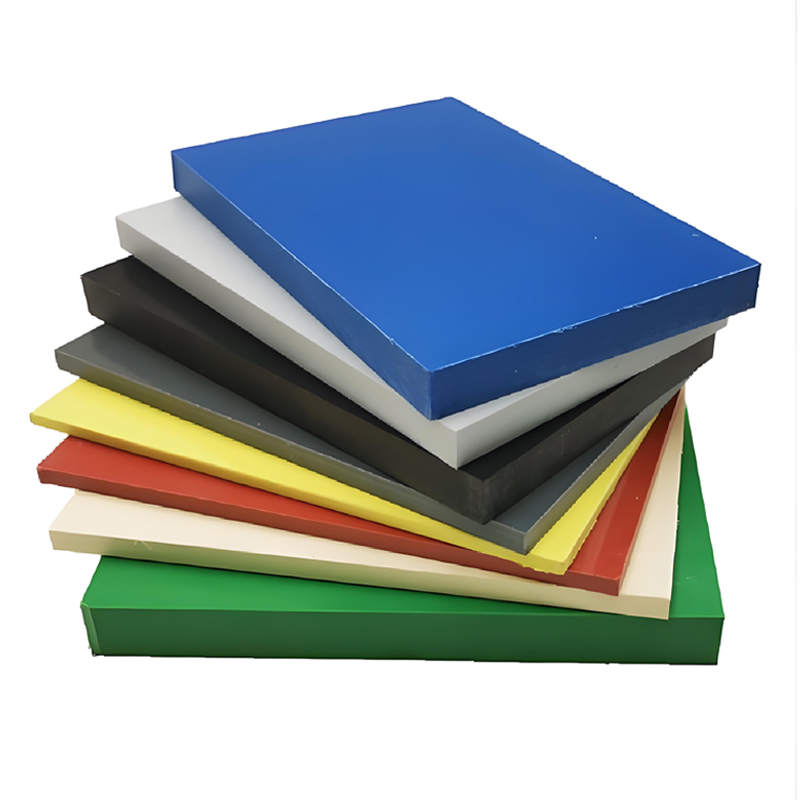
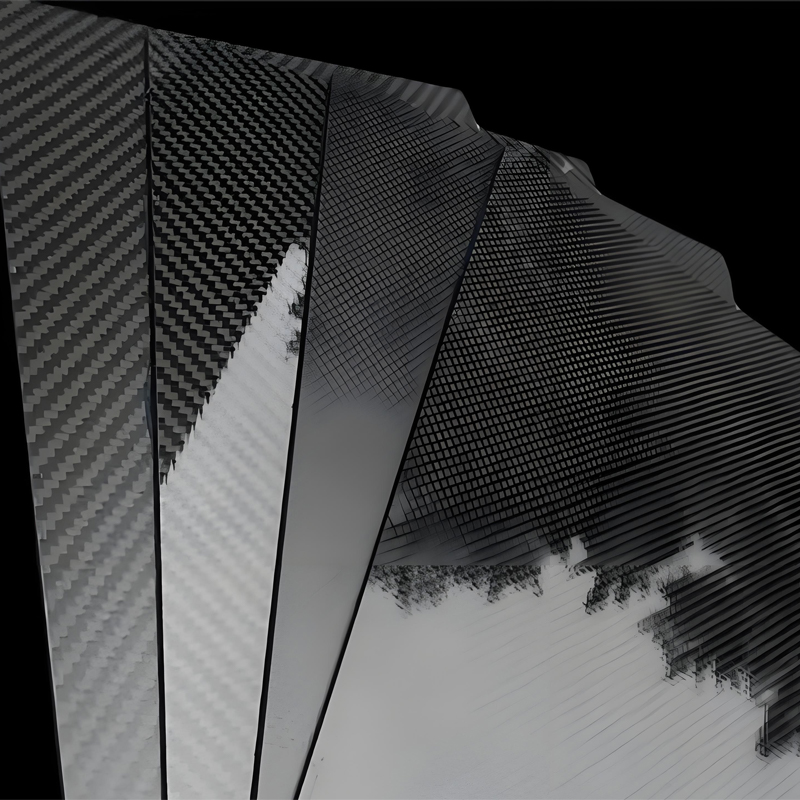 PC/ABS Semi-Finished Sheets for Durable Industrial and Consumer PartsView these sheets when thermoformable, impact-resistant PC/ABS is needed for electronic enclosures, appliance panels, automotive interiors, and industrial equipment.View Product →
The decision usually comes down to one question: does anyone need to see through the part? If yes, specify PC. If not, an alloy normally wins on cost and processing.
Where gloss and scratch resistance matter more than transparency, multi-material blends such as PMMA/ABS sheets extend the same logic into decorative and interior parts.
Thickness, Format and Tolerance on the PO
A PC sheet purchase order needs five fixed items: resin grade, gauge with tolerance, sheet format, surface and masking, and the paperwork that travels with the batch.
- Resin grade and colour: clear, bronze, opal, or a matched reference backed by an approved physical sample.
- Gauge with tolerance: 3 mm plus or minus 0.2 mm, for example, measured at five points across the sheet.
- Format: 1220 x 2440 mm and 2050 x 3050 mm are the usual stock sizes, and cut-to-size work needs a saw kerf allowance.
- Surface and masking: glossy or matte, covered with a 50 to 80 micron PE film, printed or plain.
- Documentation: technical data sheet with test methods, RoHS and REACH declarations, and batch traceability.
Two details cause more disputes than anything else. The first is mask type, because a low-tack film that peels cleanly really matters when sheet goes straight onto a thermoforming line. The second is UV protection: a coextruded cap of 50 to 80 microns is permanent, while a sprayed coating thins with every cleaning cycle and is difficult to verify from a sample.
If a quotation does not state a gauge tolerance, assume the loose end of the range, and budget for the rejects that will follow.
The buying logic for polycarbonate follows the same rules as any other thermoplastic, which we set out in our practical sheet buying guide.
Where PC Sheets Fail in Service
Most PC sheet failures are chemical, thermal or UV driven, and true impact failures are comparatively rare.
- Chemical stress cracking: amines, ketones, ammonia-based cleaners and some sealants attack polycarbonate, and cracks almost always start at a drilled hole or a machined edge.
- UV degradation: unprotected sheet hazes and yellows within one to two years outdoors, while a coextruded cap holds clarity for a decade or more.
- Thermoforming blisters: sheet that is not dried at 120 C for three to four hours traps moisture and blisters at forming temperature.
- Fastener damage: PC is notch sensitive, so sharp threads and over-torqued bolts start cracks that vibration then propagates.
- Creep and expansion: sustained loads above one third of yield stress deform slowly, and a 3 m panel moves roughly 2 mm over a 40 C swing.
Design for one third of yield stress wherever a load is permanent, fit washers under every fixing, and leave an expansion gap at each anchor point.
Sourcing, Documents and Incoming Inspection
Ask for three documents before the first shipment, then run four checks when the pallet lands.
Documents to request
- A technical data sheet that names the test method behind each value, such as ISO 180 or ASTM D256 for impact and ISO 75 or ASTM D648 for heat deflection.
- RoHS and REACH declarations, plus a UL94 rating tied to the exact thickness you are buying for flame retardant grades.
- A quality certificate and batch traceability, so a suspect panel can be traced back to a single production run.
Four checks on arrival
Measure gauge with a micrometer at five points, centre and four corners, and record the deviations.
Check transmission and haze on a sample; a clear rise in haze points to a thin or coated UV layer.
Cut a cross-section and inspect the edge under low magnification to confirm the cap is coextruded, not sprayed.
Flex a 100 x 100 mm coupon by hand; it should deform and whiten rather than shatter.
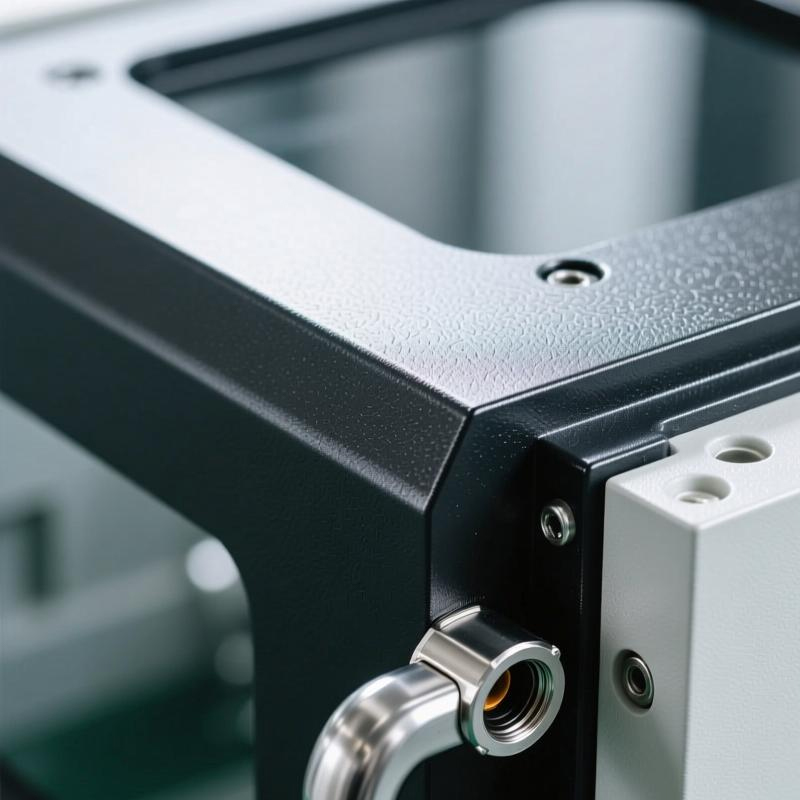 Flame-Retardant ABS/PC Housings for Electronic and Industrial EquipmentPC/ABS housings combine impact strength, heat resistance, flame retardancy, and a smooth surface for electronic and industrial enclosures.View Product →
Flame retardant ratings belong to a specific thickness. A V-0 listing at 3 mm does not automatically transfer to a 1.5 mm sheet, so the certificate has to match the gauge on the order.
Applications and Grade Matching
Grade selection follows the service environment far more than the headline numbers on a data sheet.
Glazing and guarding
3 to 6 mm clear PC, UV cap on both faces, plain or printed mask.
Electrical housings
Flame retardant PC/ABS, 1.5 to 4 mm, pigmented, V-0 at the specified gauge.
Automotive interior
Low-gloss PC/ABS, 2 to 4 mm, high flow for large trim panels, colour matched to the cabin palette.
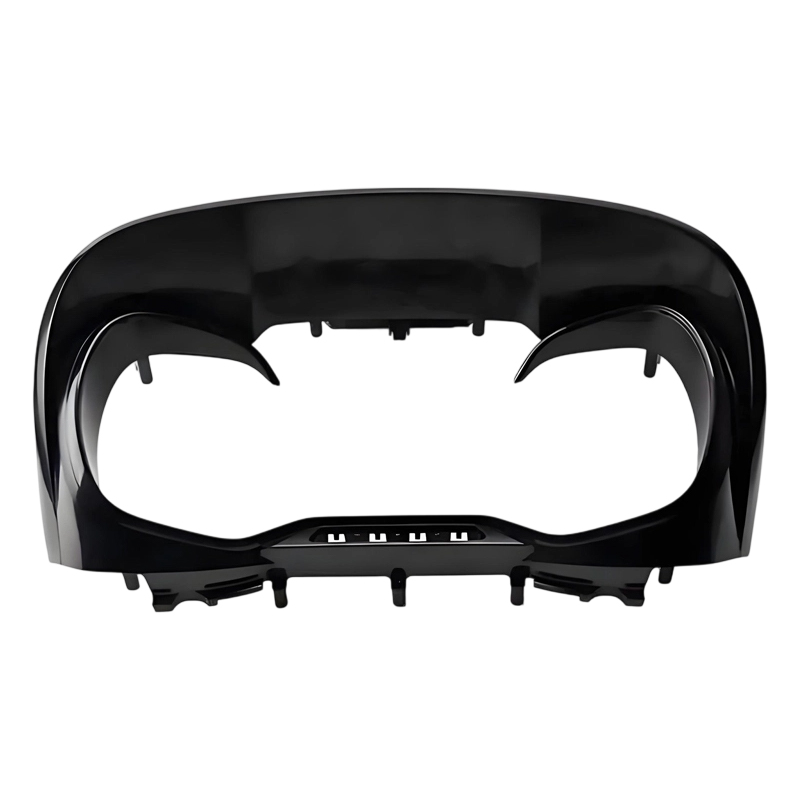
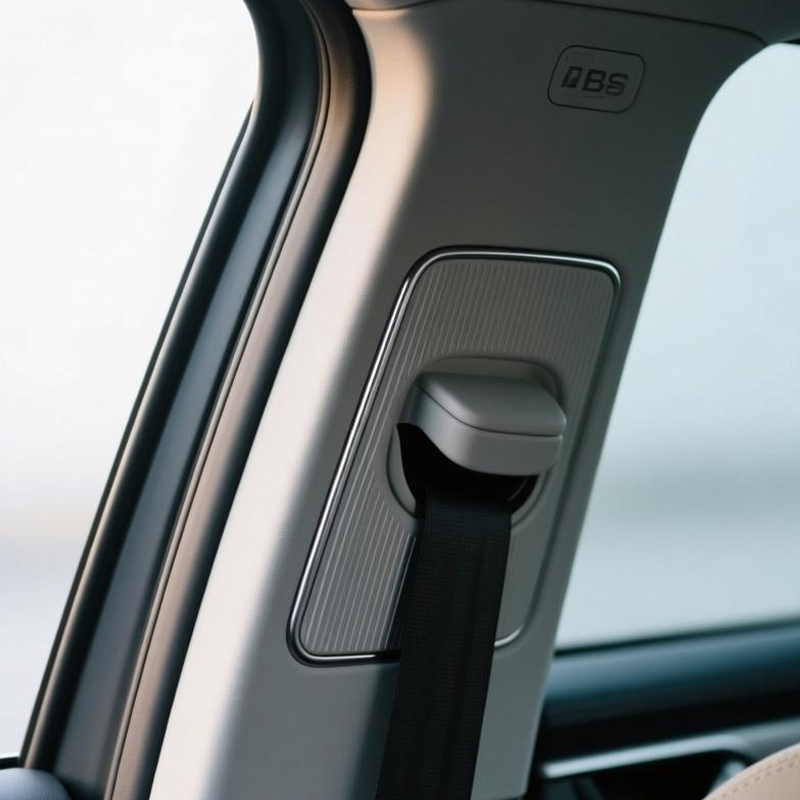 ABS/PC Interior Trim for Dashboards, Door Handles, and Pillar PanelsThese PC/ABS automotive interior parts offer impact strength, heat resistance, dimensional stability, flame retardancy, and matte or glossy finishes for dashboards, handles, and trim.View Product →
Match the sheet to the failure you cannot afford: yellowing outdoors, cracking around a fixing, or a failed flammability test in the finished product.
Frequently Asked Questions
Are polycarbonate sheets and acrylic sheets interchangeable?
No. Acrylic is clearer and cheaper but brittle, so it cracks instead of denting, while polycarbonate resists impact and vibration far better even though it scratches more easily. Specify PC for machine guards, safety windows and anything exposed to abuse, and keep acrylic for decorative signage and light-duty displays.
How much does a PC sheet weigh?
At a density of about 1.20 g/cm3, a 3 mm sheet weighs roughly 3.6 kg per square metre. A 1220 x 2440 mm panel comes to about 10.7 kg and a 2050 x 3050 mm panel to about 22 kg, which drives freight cost, manual handling and the number of fixings you need.
Can PC sheet be thermoformed in a workshop oven?
Yes, if the sheet is dried first. Dry it at 120 C for three to four hours in a desiccant oven and form it between 180 and 205 C. Undried sheet blisters, and overheated sheet loses impact strength permanently.
How can I tell a coextruded UV layer from a sprayed coating?
Look at the edge. A coextruded cap appears as a distinct thin line in a polished cross-section under low magnification and cannot be polished away. A sprayed coating sits on the surface, can be scraped off with a blade, and usually leaves a visible gloss change along the sheet edge.
Buy on grade, gauge tolerance, UV construction and traceable test data, and the sheet that arrives will behave the way the data sheet promised.
Related products

GET A QUOTE
Copyright © Jiangsu Mingchanghe Technology Co., Ltd. All Rights Reserved Engineering Plastic Sheets Manufacturers
