

 English
 中文简体
 Español


Jiangsu Mingchanghe Technology Co., Ltd.
Jiangsu Mingchanghe Technology Co., Ltd.
Jiangsu Mingchanghe Technology Co., Ltd.
Jiangsu Mingchanghe Technology Co., Ltd.
Jiangsu Mingchanghe Technology Co., Ltd.
Jiangsu Mingchanghe Technology Co., Ltd.
Jiangsu Mingchanghe Technology Co., Ltd.
Jiangsu Mingchanghe Technology Co., Ltd.
Jiangsu Mingchanghe Technology Co., Ltd.
Jiangsu Mingchanghe Technology Co., Ltd.
Jiangsu Mingchanghe Technology Co., Ltd.
Jiangsu Mingchanghe Technology Co., Ltd.
Jiangsu Mingchanghe Technology Co., Ltd.
Jiangsu Mingchanghe Technology Co., Ltd.
Jiangsu Mingchanghe Technology Co., Ltd.
16 Oct 2026, Posted by MCH
TPU/ABS Composite Sheet Guide: Layer Structure, Properties and Buying Tips
Content
A vacuum-forming shop once scrapped a whole batch of automotive interior panels because the TPU skin on a TPU/ABS composite sheet began lifting at the draw corners. The sheet matched its datasheet. The failure traced back to a 0.35 mm TPU layer bonded with a grade whose peel strength collapsed once the sheet passed roughly 140 C in the oven. Nothing on the purchase order had specified a heat-resistant bond line.
The lesson holds across the whole product family. A TPU/ABS composite sheet is not one material. It is a group of multilayer thermoplastics, and what you actually receive depends on three variables: TPU hardness, TPU skin thickness, and the strength of the bond between the ABS core and the TPU face.
The datasheet tells you what the sheet is. It rarely tells you how the sheet behaves after 140 C.
What a TPU/ABS Composite Sheet Actually Is
A TPU/ABS composite sheet is a multilayer thermoplastic sheet in which one or both faces consist of thermoplastic polyurethane bonded to a rigid ABS core.
TPU/ABS composite sheet defined: a coextruded or laminated sandwich built from a rigid ABS core and one or two TPU skins, typically supplied in gauges from about 1 mm to 8 mm and in sheet formats that can be cut, routed, or thermoformed.
ABS supplies stiffness, dimensional stability, and a low unit cost. TPU supplies a soft-touch surface, abrasion resistance, and enough elongation to survive deep draws without stress whitening. Neither polymer delivers that combination on its own, which is exactly why the composite exists.
Two constructions dominate the market:
- TPU/ABS/TPU - TPU on both faces, used where both sides stay visible or get handled
- TPU/ABS - TPU on one face only, used where the reverse side sits against a substrate
Typical skin gauges run from 0.2 mm to 1.0 mm per side. Below 0.2 mm the skin wears through quickly in handling. Above roughly 1.0 mm the sheet begins to behave less like a rigid panel and more like a flexible membrane, which changes how it moves in a vacuum former.
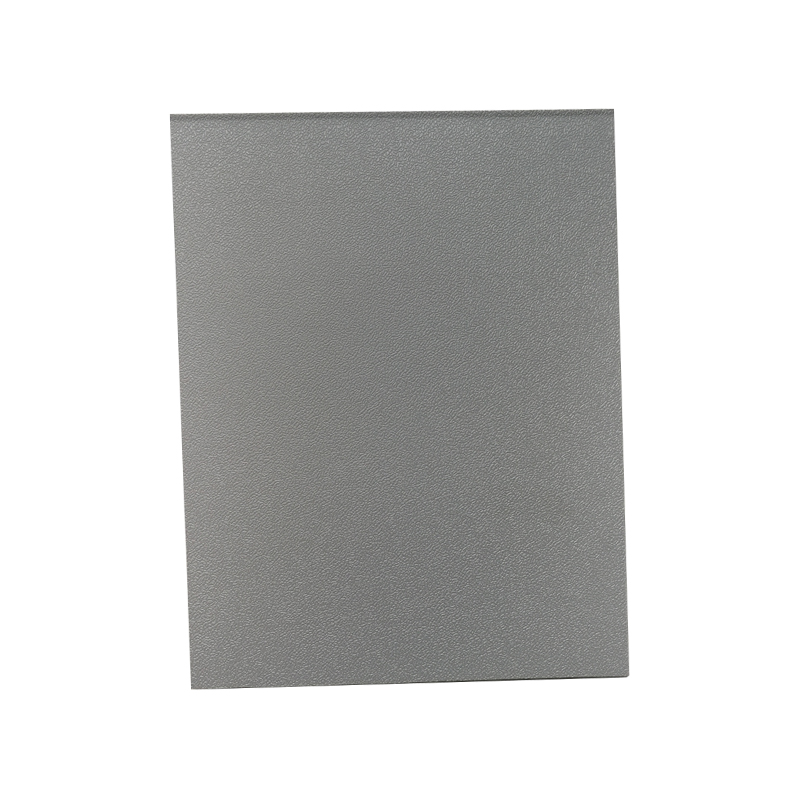
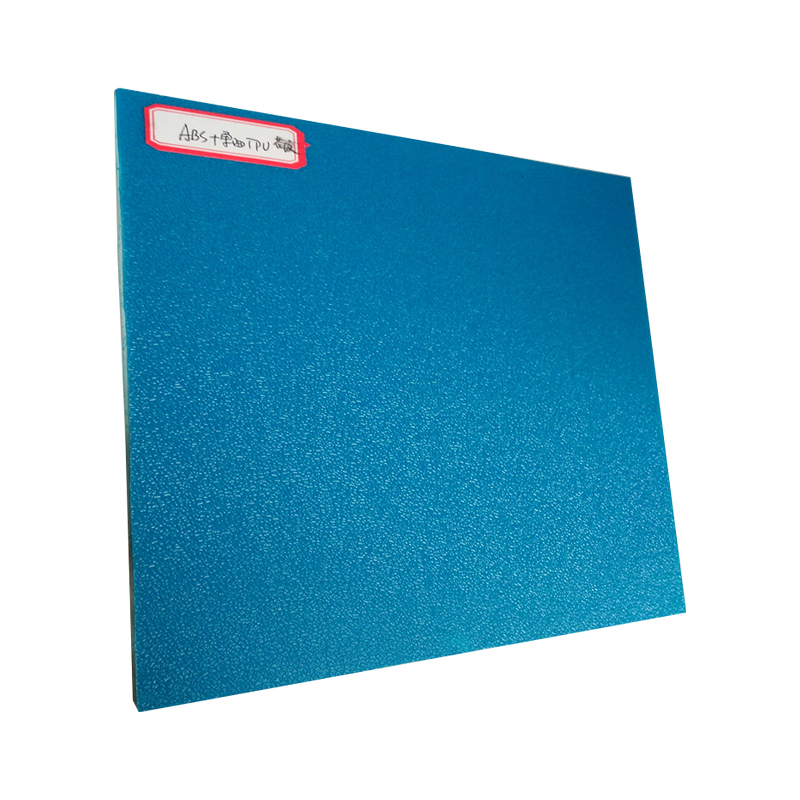 TPU/ABS Semi-Finished Sheets for Industrial FabricationSemi-finished TPU/ABS sheets with smooth, uniform surfaces, impact and wear resistance, and custom color; useful where skin gauge and sheet format affect processing.View Product →
MCH Technology supplies both constructions inside its TPU/ABS sheet range, and treats color, thickness, surface texture, and sheet size as custom parameters rather than fixed catalogue items.
How Layer Structure and TPU Hardness Define Performance
TPU hardness, measured on the Shore A scale, is the single most useful number to fix when you specify a TPU/ABS composite sheet.
Most TPU skins used on sheet composites sit between 75A and 95A. The choice matters more than most buyers expect, and it pulls in two opposite directions.
Softer skin: 75A to 85A
- Near-rubber feel with visible give
- Better elongation across deep draws
- Marks more easily under sharp contact
- Chosen when touch quality drives the part
Harder skin: 88A to 95A
- Firmer, closer to a plastic feel
- Stronger scratch and abrasion resistance
- Less recovery after compression
- Chosen for trays, housings, and guards
Rule of thumb: if the part will see more than 130 C during forming or in service, verify peel strength after heat ageing rather than on the incoming sheet alone.
Peel strength between the TPU skin and the ABS core decides whether a formed part survives its service life. Coextruded sheet generally outperforms laminated sheet here, because the bond forms in the melt before either polymer has fully cooled. Laminated sheet can still work, but it demands tighter process control and a closer look at the adhesive system.
Key Properties and Typical Specification Ranges
A TPU/ABS composite sheet delivers a hybrid property set: ABS-level stiffness carrying a TPU-level surface.
1.0 - 8.0 mm Overall sheet thickness
75A - 95A TPU skin hardness
0.2 - 1.0 mm TPU skin per face
| Property | Typical range | Practical effect |
| Overall thickness | 1.0 to 8.0 mm | Sets stiffness and the usable forming window |
| TPU skin thickness | 0.2 to 1.0 mm per face | Drives wear life and the depth of the soft-touch feel |
| TPU Shore hardness | 75A to 95A | Balances surface feel against scratch resistance |
| Density | 1.05 to 1.15 g/cm3 | Determines part weight and freight cost |
| Peel strength | 4 to 12 N/mm | Decides whether trimmed edges stay bonded |
| Continuous service temperature | Minus 30 to 85 C | Limits under-bonnet and long-term outdoor use |
A 0.6 mm skin at 90A will outlast a 0.3 mm skin at 80A by a wide margin under abrasive handling, but it will also feel noticeably harder in the hand. Buyers who specify on hardness alone often end up with a part that measures correctly and feels wrong.
Where TPU/ABS Sheets Get Specified
TPU/ABS composite sheets are specified most often where a part needs structural stiffness, a damage-resistant surface, and a shape that is cheaper to thermoform than to injection mould.
- Automotive interior components such as door panels, pillar trims, and dashboard accents
- Engine and transmission protective covers
- Thermoformed trays for automotive components
- Suitcase shells and luggage panels
- Medical equipment housings
- Advertising and signage panels
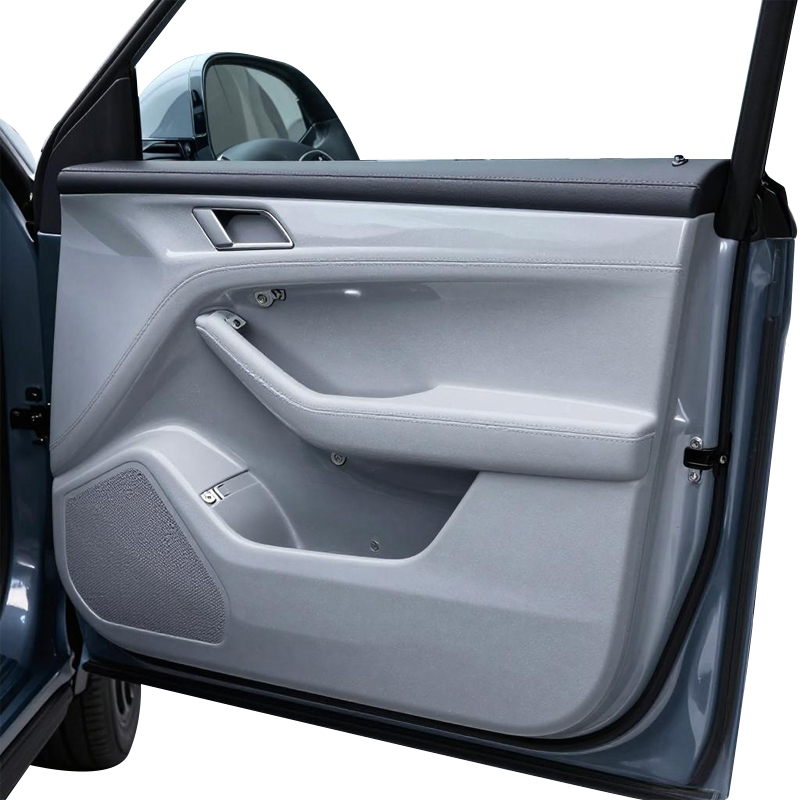
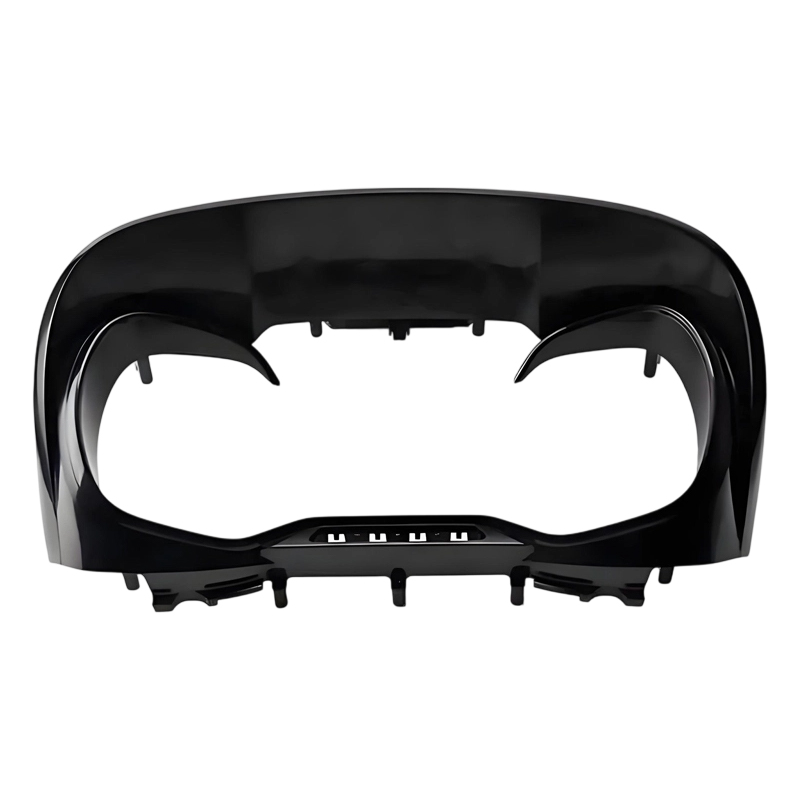
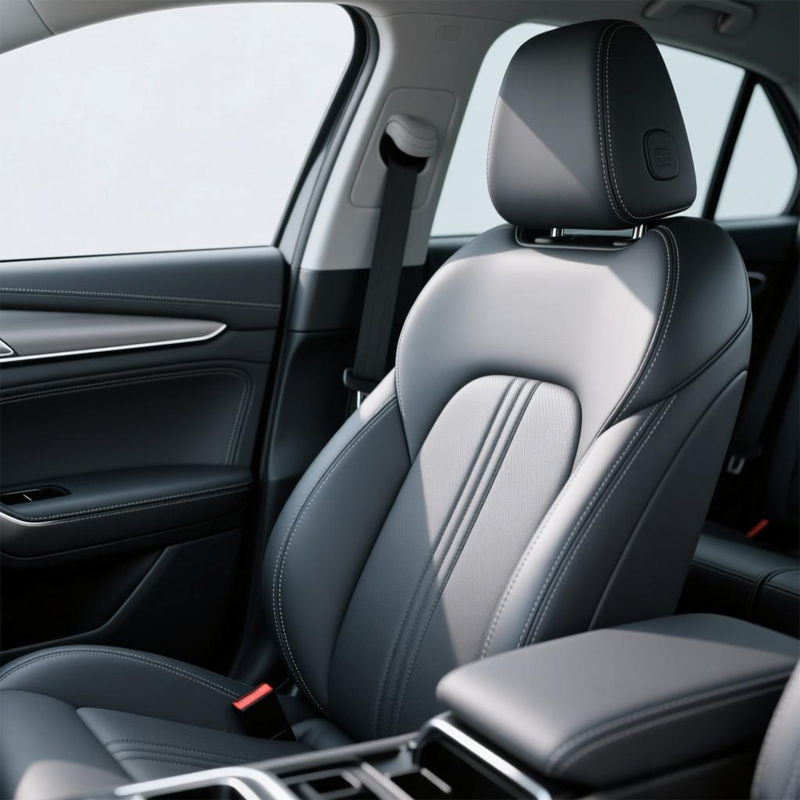 TPU/ABS Automotive Interior Components and Protective CoversTPU/ABS composite automotive parts for thermoformed interior trim and engine or transmission covers, with heat resistance, chemical resistance, and straightforward installation.View Product →
Automotive interior work is the largest single application, for a practical reason. Interior trim parts are large, low-volume, and often curved in ways that make injection moulding uneconomic. A TPU/ABS sheet can be heated, drawn over a tool, and trimmed at a fraction of the tooling cost.
Under-bonnet work is a different specification problem. Engine and transmission covers need a TPU face that resists oil, abrasion, and stone chipping while the ABS core holds the mounting geometry and survives vibration. That usually pushes the specification toward the harder end of the hardness range and toward a coextruded rather than laminated construction.
Thermoforming and Processing Notes
TPU/ABS composite sheet processes much like plain ABS, with two differences that catch people out: the TPU skin absorbs moisture, and the bond line is the weakest element at forming temperature.
- Pre-dry the sheet for 2 to 4 hours at roughly 80 C. Drying time scales with thickness, and a 6 mm sheet needs the longer end of that window.
- Heat to a surface temperature of 130 to 160 C. Contact heating gives better control than open radiant heating on thick sheet.
- Form by vacuum or pressure assist. Keep the draw ratio below about 1:1 on parts where the TPU skin is thin.
- Cool evenly. Uneven cooling lets shrinkage pull the skin away from the core at corners and deep ribs.
- Trim with sharp tooling. A dull cutter drags the TPU edge and tears it instead of slicing cleanly.
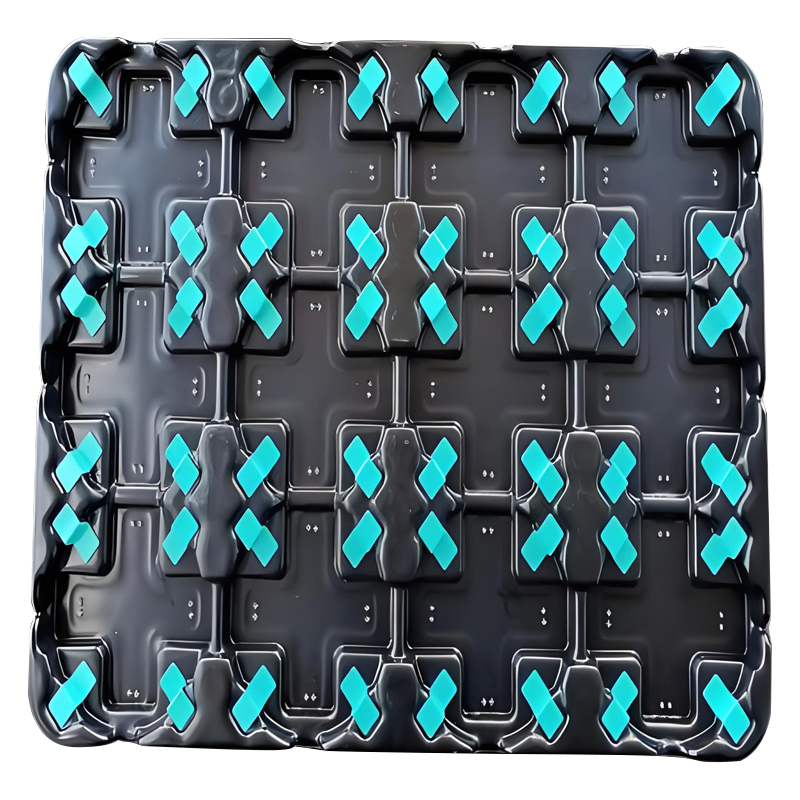
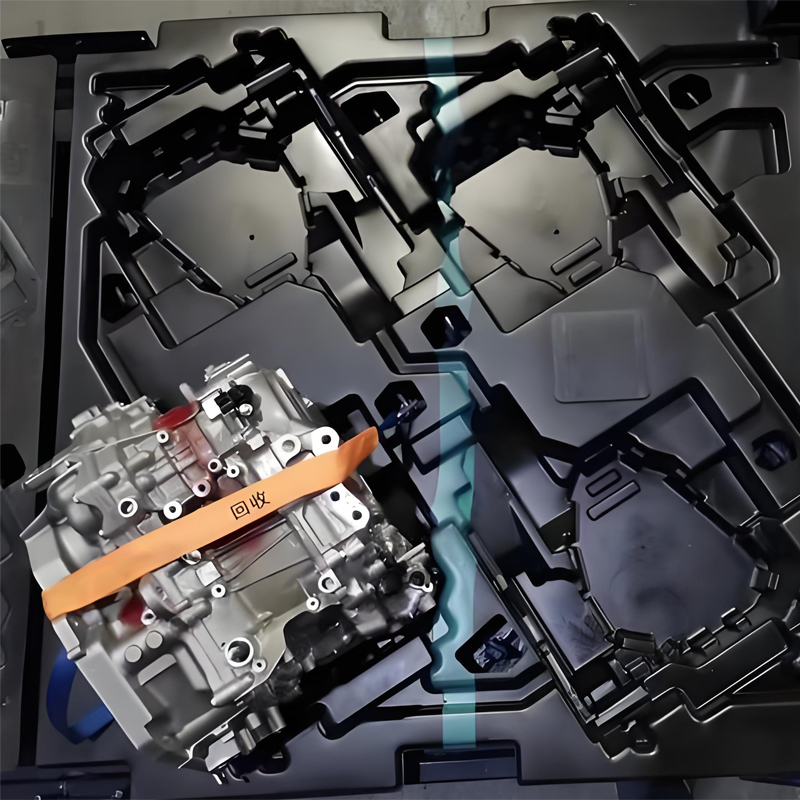 TPU/ABS Thermoforming Trays for Automotive Component HandlingThermoformed TPU/ABS trays for automotive parts, with impact, chemical, and temperature resistance; useful when moisture control and bond integrity affect forming.View Product →
Moisture is the most common cause of surface defects on these sheets. A TPU skin holding even 0.2 percent water will blister at forming temperature, and those blisters look exactly like a failed bond even when the bond is sound.
Specifying and Buying: A Short Checklist
Five items decide whether a TPU/ABS composite sheet order performs as expected.
- Confirm the construction. TPU/ABS/TPU and TPU/ABS are not interchangeable, and the drawing should state which faces carry TPU.
- Lock the skin thickness in millimetres, not as a percentage of overall gauge. A percentage changes meaning every time thickness changes.
- State the TPU hardness on the Shore A scale and say whether it applies to the incoming sheet or to the formed part.
- Set a minimum peel strength and specify whether it is measured before or after heat ageing.
- State the forming temperature range the sheet must survive, even if the moulder handles the forming itself.
For background on how the ABS family behaves across grades and thicknesses, the ABS sheet buying guide covers the base polymer in more detail.
Frequently Asked Questions
Is a TPU/ABS composite sheet the same as an ABS sheet with a coating?
No. A coating is applied on top of a finished ABS sheet and sits above the surface. A TPU/ABS composite sheet bonds a TPU layer into the sheet structure itself, usually by coextrusion or lamination, so the TPU face behaves as part of the panel rather than as a film on top of it.
Can TPU/ABS composite sheet be thermoformed like plain ABS?
Broadly yes, with two adjustments. The TPU face needs proper pre-drying, and the forming temperature should stay inside the range where peel strength holds. Above roughly 140 C, bond performance becomes the limiting factor rather than the ABS core.
Which TPU hardness should I choose?
Pick 75A to 85A when surface feel matters most, such as visible interior trim. Pick 88A to 95A when wear resistance and dimensional stability matter more, such as trays, housings, and protective covers.
What thickness range is practical?
Most TPU/ABS composite sheet runs between 1.0 mm and 8.0 mm overall, with TPU skins of 0.2 mm to 1.0 mm per face. Thinner sheet forms more easily but flexes under load; thicker sheet holds shape but needs longer drying and heating cycles.
When in doubt, ask for a sample sheet at the exact skin thickness and hardness you plan to run, form it on your own tool, and test the bond at the draw corners. It is the cheapest test in the whole project.
Related products

GET A QUOTE
Copyright © Jiangsu Mingchanghe Technology Co., Ltd. All Rights Reserved Engineering Plastic Sheets Manufacturers
