

 English
 中文简体
 Español


Jiangsu Mingchanghe Technology Co., Ltd.
Jiangsu Mingchanghe Technology Co., Ltd.
Jiangsu Mingchanghe Technology Co., Ltd.
Jiangsu Mingchanghe Technology Co., Ltd.
Jiangsu Mingchanghe Technology Co., Ltd.
Jiangsu Mingchanghe Technology Co., Ltd.
Jiangsu Mingchanghe Technology Co., Ltd.
Jiangsu Mingchanghe Technology Co., Ltd.
Jiangsu Mingchanghe Technology Co., Ltd.
Jiangsu Mingchanghe Technology Co., Ltd.
Jiangsu Mingchanghe Technology Co., Ltd.
Jiangsu Mingchanghe Technology Co., Ltd.
Jiangsu Mingchanghe Technology Co., Ltd.
Jiangsu Mingchanghe Technology Co., Ltd.
Jiangsu Mingchanghe Technology Co., Ltd.
23 Sep 2026, Posted by MCH
ASA/ABS Sheets: Coextruded Weatherable Stock for Durable Outdoor Applications
Content
A white sign face or a machine cover that looks correct on the day it ships and turns chalky pink after two summers is almost never a moulding fault. The substrate was fixed at the quotation stage, and standard ABS cannot hold colour outdoors without help.
ASA/ABS sheet is the material most converters reach for at that point. It costs more than plain ABS sheet and less than a solid ASA or PMMA sheet of the same thickness, and it keeps the impact behaviour and the fabrication habits that ABS processors already run every day.
Working definition. ASA/ABS sheet is a coextruded thermoplastic sheet made from an ABS core with a thin ASA (acrylonitrile styrene acrylate) cap layer fused to one or both faces during extrusion. The cap carries the colour and the UV resistance; the core carries the thickness, the stiffness and the cost.
What an ASA/ABS Sheet Really Is
ASA/ABS sheet is a two-material product, not a blend, and that distinction decides how a panel behaves after five summers on a roof.
The core is ABS, whose toughness comes from butadiene rubber. Butadiene contains unsaturated double bonds, and ultraviolet light plus oxygen attack those bonds directly, which is why unprotected ABS chalks, dulls and yellows. The cap replaces butadiene with acrylic ester rubber, a saturated backbone that resists the same attack without paint, film or clear coat.
Both polymers are fed into one die and bonded while still molten, so there is no adhesive line and no film edge to lift. Cap and core expand and contract together through thermoforming and through the daily thermal cycling of an outdoor enclosure.
Three ways suppliers deliver ASA protection
- Coextruded cap. Roughly 0.2 to 0.8 mm of ASA per face, fused in the die. Predictable weathering, no delamination risk, and it survives deep draws.
- ASA/ABS alloy. Uniform through the full thickness and usually cheaper, but UV performance depends on how evenly the ASA phase sits at the surface. Routing or sanding a fresh face removes the protection.
- Laminated film. An ASA or PVDF film bonded to an ABS core. High gloss, good weatherability, but edges can lift and air can be trapped during forming.
The cap is the product. If a quotation says ASA/ABS but cannot name the cap thickness in millimetres and state whether the cap sits on one face or two, you are buying an unknown. Put the number on the drawing and on the purchase order.
Sheet producers that run dedicated coextrusion lines normally publish cap thickness and weathering performance together, so you can compare grades without guessing. This technical note on coextruded ASA/ABS stock for thermoformed outdoor parts shows how that information is usually presented.
Why the ASA Cap Sets the Outdoor Service Life
Outdoor service life of an ASA/ABS panel is set by the cap layer, not by the sheet thickness. A 1.5 mm sheet with a 0.6 mm cap will outlast a 4 mm sheet with a 0.15 mm cap every time.
Colour shift under 3 dE after roughly 2,000 hours of accelerated weathering Typical coextruded ASA/ABS result, against 10 dE or more for unprotected ABS in the same exposure
Chalking is the visible symptom that arrives first. The surface resin degrades into a pale powder that traps dirt and cannot be polished back, and gloss loss is measurable well before the colour moves.
The cap also works as a UV filter. Energy that would otherwise reach the ABS core is absorbed in the first few tenths of a millimetre, so the core keeps its impact strength far longer than unprotected ABS of the same thickness. The real weakness is mechanical rather than chemical: scrape through the cap with a fork truck and degradation starts in that scratch, then spreads sideways.
| Sheet type | UV and colour stability | Impact strength | Thermoforming | Relative cost |
| Plain ABS | Poor outdoors, chalks and yellows | High | Excellent | Lowest |
| Coextruded ASA/ABS | Very good, colour shift typically under 3 dE | High | Excellent | Moderate |
| PC/ABS with UV package | Fair to good, visible shift over long exposure | Very high | Good, requires drying | Moderate to high |
| PMMA acrylic | Excellent | Low, brittle under impact | Limited | Moderate |
Specifications That Decide Fit, Cost and Lead Time
Five numbers control most of the price, the lead time and the risk on an ASA/ABS sheet order: overall thickness, cap thickness, sheet size, thickness tolerance and surface texture.
1.0 to 12 mmCommon thickness range
0.3 to 0.8 mmASA cap per face
plus or minus 0.1 to 0.3 mmTypical thickness tolerance
up to 2,000 x 3,000 mmCommon sheet size
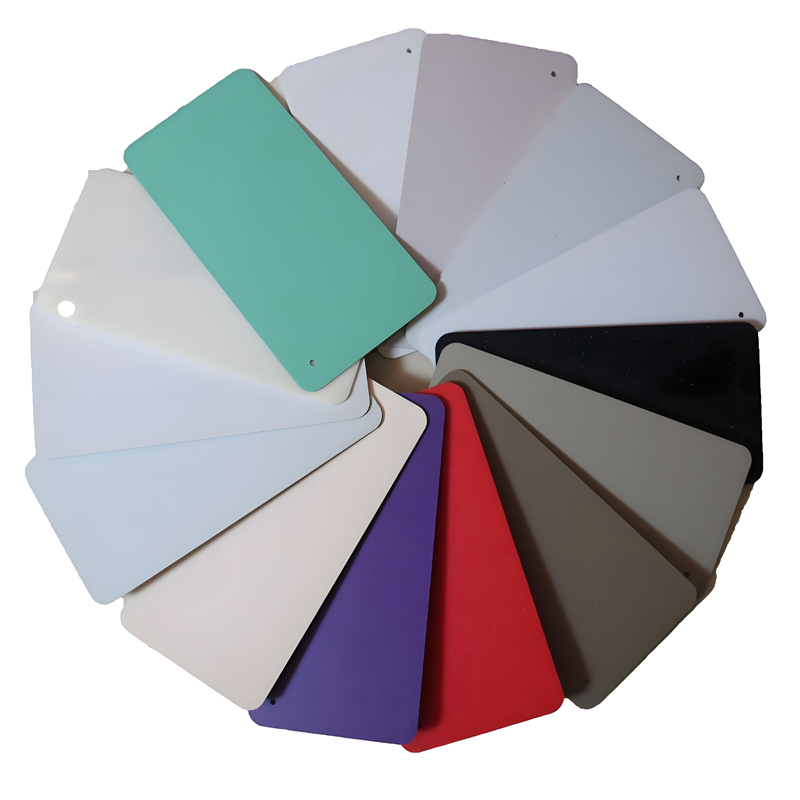
Colour, thickness, texture and cut size are all specified per order, and semi-finished ASA/ABS stock is normally the starting point before any secondary operation such as forming, printing or routing.
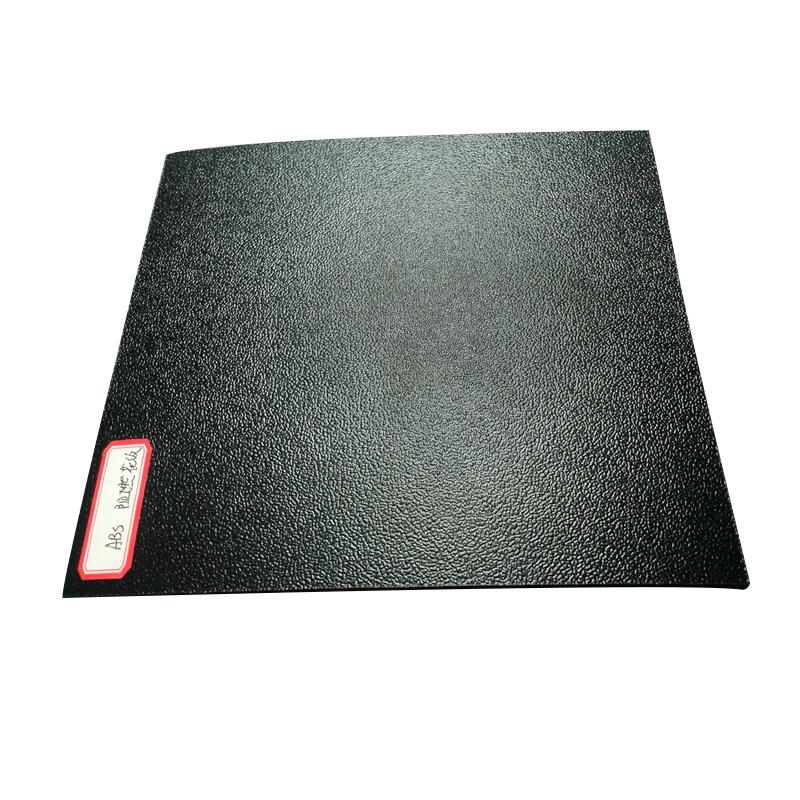
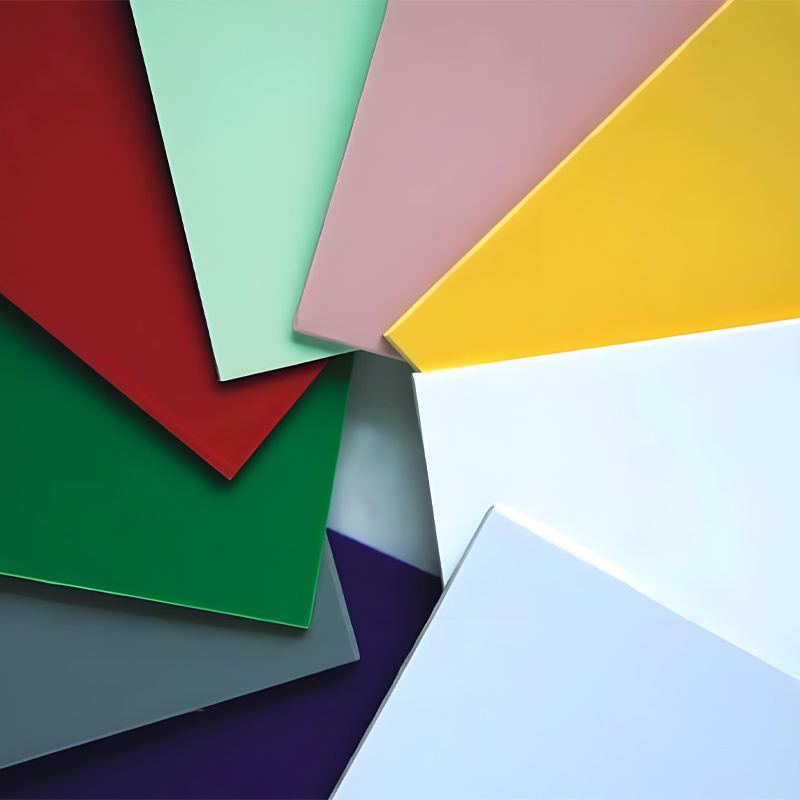 ABS/ASA Semi-Finished SheetsASA/ABS Semi-Finished Sheets combine the advantages of ASA and ABS materials, offering exceptional weather resistance and mechanical performance. The surface is smooth...View Product →
What to write on the drawing
- Cap thickness and which faces carry it, including whether the inner face needs protection.
- Colour matched to a physical standard, never to a screen image or a phone photo.
- Surface texture, whether hair cell, matte or gloss, plus the direction of any grain.
- Thickness tolerance and flatness, especially for large panels that will be printed or laminated.
- Masking film and interleaving, so the sheet arrives at the forming line unmarked.
Treat cap thickness as a specification line, not a marketing adjective. A 0.2 mm cap and a 0.6 mm cap are different products sold under the same name, and they age at different speeds.
| Thickness | Typical part | Why this range |
| 1.0 to 2.0 mm | Sign faces, light box panels, flat trim | Low weight, easy to print and cut |
| 2.0 to 3.0 mm | Equipment covers, caravan and trailer trim, machine guards | Balance of stiffness and formability |
| 3.0 to 5.0 mm | Thermoformed housings, sanitary panels, agricultural covers | Deep draws that still leave usable wall thickness |
| 6.0 to 12 mm | Structural outdoor panels and cladding | Screw retention and panel stiffness |
Fabrication: Forming, Machining and Joining
ASA/ABS sheet thermoforms on the same equipment as ABS, with one difference that catches people out: the cap is a thin skin, and it thins with the sheet wherever the part is drawn deep.
Thermoforming and vacuum forming
- Dry the sheet for 2 to 4 hours at 80 degrees Celsius if it has been stored in humid air.
- Heat the sheet surface to roughly 140 to 165 degrees Celsius, measured on the sheet, not the oven.
- Keep draw ratios near 1.5 to 1 where appearance matters, and add generous corner radii.
- Cool below 80 degrees Celsius inside the mould before demoulding to avoid warping.
Machining, routing and joining
- Use sharp carbide tooling with high spindle speed and moderate feed to stop the cap smearing.
- Avoid heavy sanding on exposed faces, which removes the protective layer.
- Solvent and ultrasonic welding work well on ABS-based cores.
- Adhesive bonding needs a light abrasion and a solvent wipe on the core side only.
- Dry the sheet. Two to four hours at 80 degrees Celsius for stock stored in humid conditions, then bring it to the forming area.
- Heat to forming temperature. Sheet surface 140 to 165 degrees Celsius, checked with a contact probe rather than the oven set point.
- Form and hold. Apply vacuum or pressure, then hold while the surface cools enough to take the tool shape.
- Cool in the mould. Below 80 degrees Celsius before demoulding, which controls warping and print-through on the cap.
- Trim and finish. CNC trimming, edge polishing and any masking removal, keeping the cap on the exposed face.
Cap thinning maths. A 0.5 mm cap stretched 30 percent behaves like a 0.35 mm cap at the deepest point of the draw. On permanent outdoor parts, size the cap for the stretched thickness, not the flat sheet.
Where ASA/ABS Sheets Earn Their Price
ASA/ABS sheet pays for itself wherever a part faces sun and weather but does not need the optical clarity of acrylic or the stiffness of a composite panel.
- Outdoor building elements such as cladding, fascia, roof edge trim and window surrounds.
- Caravan, RV and commercial vehicle exterior trim, where colour must survive years of road and sun.
- Signage and light box faces where a painted or filmed panel would need rework.
- Agricultural and construction equipment covers that see wash-down plus UV.
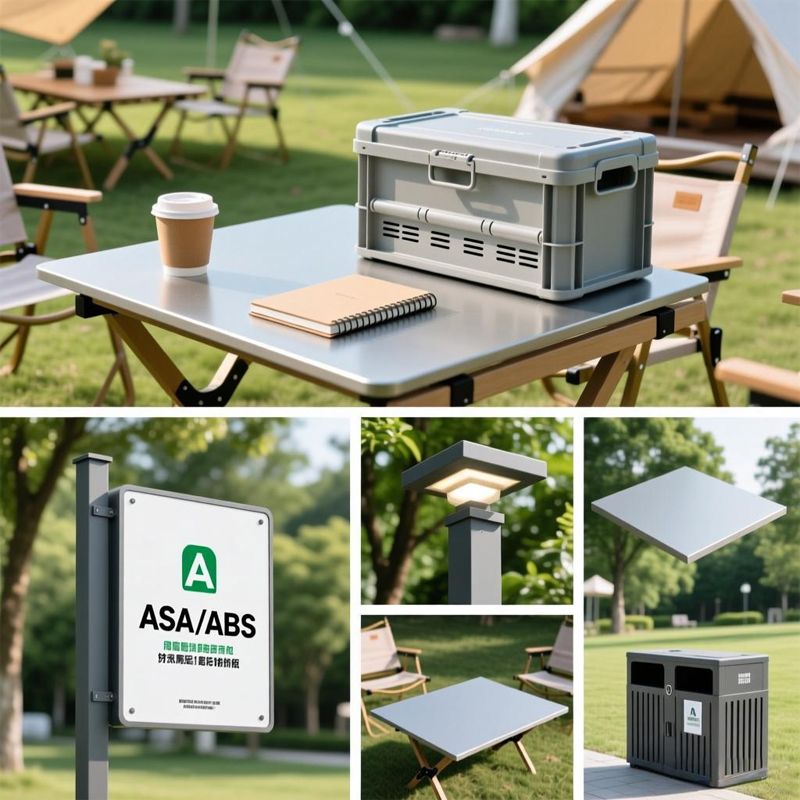 ABS/ASA Outdoor Building MaterialsASA/ABS Outdoor Building Materials are formulated with advanced technology, combining the exceptional weather resistance of ASA with the high strength of ABS, providin...View Product →
Total cost view. A painted ABS part carries paint, masking labour, cure time, reject rates and repaint cycles. An unpainted ASA/ABS part carries none of those. On a two square metre exterior panel, the paint route often costs more than the ASA cap layer ever will.
A Practical Selection Checklist
Run these five checks before you approve an ASA/ABS quotation, because each one has stalled a project somewhere.
- Cap thickness in writing. Millimetres per face, on the drawing and on the certificate of conformance.
- Weathered sample, not a delivered sample. A fresh panel tells you nothing about colour stability.
- Tolerance matched to the process. Tight tolerance on a deep-draw part is wasted money, loose tolerance on a flat printed panel is scrap.
- Physical colour standard. A chip or plaque, not a digital file rendered on an uncalibrated monitor.
- Forming trial on the real tool. Confirm cap thinning at the deepest point before releasing the order.
Ask for a 300 x 300 mm sample in the exact cap thickness you intend to buy, form it on the production tool, and leave one formed piece outdoors for a full season. That single test answers more questions than any datasheet comparison.
Frequently Asked Questions About ASA/ABS Sheets
Is ASA/ABS the same as ABS with a UV additive?
No. A UV package slows degradation inside the ABS itself, but the butadiene backbone remains the weak point and the additive is consumed over time. ASA/ABS replaces the vulnerable polymer at the surface, so protection does not deplete the way an additive does.
Can ASA/ABS sheet be thermoformed without cracking?
Yes, and it runs on the same equipment as ABS. Dry the sheet for 2 to 4 hours at 80 degrees Celsius if it has absorbed moisture, heat the surface to 140 to 165 degrees Celsius, and cool below 80 degrees Celsius before demoulding. Sharp corners and draw ratios above roughly 1.5 to 1 need extra radius.
How thick should the ASA cap be for a permanent outdoor part?
For permanent exterior exposure in strong sun, 0.4 to 0.6 mm per exposed face is the usual working range, measured after forming. Caps of 0.2 to 0.3 mm are common on short-life parts and on shaded or indoor applications.
Does an ASA/ABS panel need painting or a clear coat?
No. The cap is the finish. Painting adds cost, process steps and a new failure point, and paint adhesion on ASA requires careful preparation. The exception is a colour that cannot be matched in ASA resin at all, where a painted ABS part may still be cheaper.
An ASA/ABS order succeeds or fails on one line of the drawing. Match the cap thickness to the real exposure, allow for thinning at the deepest draw, and the rest of the job follows ordinary ABS processing. For the wider range of engineering plastic sheet materials made by MCH Technology, see the engineering plastic sheet range.
Related products

GET A QUOTE
Copyright © Jiangsu Mingchanghe Technology Co., Ltd. All Rights Reserved Engineering Plastic Sheets Manufacturers
