

 English
 中文简体
 Español


Jiangsu Mingchanghe Technology Co., Ltd.
Jiangsu Mingchanghe Technology Co., Ltd.
Jiangsu Mingchanghe Technology Co., Ltd.
Jiangsu Mingchanghe Technology Co., Ltd.
Jiangsu Mingchanghe Technology Co., Ltd.
Jiangsu Mingchanghe Technology Co., Ltd.
Jiangsu Mingchanghe Technology Co., Ltd.
Jiangsu Mingchanghe Technology Co., Ltd.
Jiangsu Mingchanghe Technology Co., Ltd.
Jiangsu Mingchanghe Technology Co., Ltd.
Jiangsu Mingchanghe Technology Co., Ltd.
Jiangsu Mingchanghe Technology Co., Ltd.
Jiangsu Mingchanghe Technology Co., Ltd.
Jiangsu Mingchanghe Technology Co., Ltd.
Jiangsu Mingchanghe Technology Co., Ltd.
18 Sep 2026, Posted by MCH
HIPS Plastic Sheets: Properties, Applications and Buying Guidance | MCH
Content
- 1 What HIPS Sheets Are — and Why the Impact Modifier Matters
- 2 Where HIPS Sheets Earn Their Place
- 3 Built for the Thermoformer: Processing and Fabrication
- 4 Specifying Thickness, Color, Texture and Size
- 5 How HIPS Stacks Up Against ABS and HDPE
- 6 Limitations Worth Raising Before You Order
- 7 A Final Checklist Before You Commit
Open a refrigerator and look at the glossy inner liner, lift a supermarket tray of fresh produce, or study the backdrop of a retail display stand: many of those rigid parts began as HIPS plastic sheets. The buying logic is easy to state up front. When a component must stay rigid, survive knocks, stretch into a deep vacuum-formed shape and still meet a tight unit cost at volume, high impact polystyrene is one of the most dependable sheet materials available — provided it lives indoors and stays below roughly 60–65°C in service.
That conclusion hides the detail where projects succeed or fail. Drawing on more than three decades of sheet production experience at MCH Technology, this guide covers what HIPS actually is, where it outperforms neighboring materials, how it behaves in forming, and which specification points to settle with your supplier before the first production run.
What HIPS Sheets Are — and Why the Impact Modifier Matters
HIPS starts as ordinary polystyrene: rigid, dimensionally stable, inexpensive and famously brittle. Producers fix that by dispersing fine rubber particles through the polymer before extrusion. The rubber works as an internal shock absorber, arresting the micro-cracks that would shatter pure polystyrene. The trade-offs are predictable: HIPS is opaque rather than crystal clear, slightly softer than glassy polystyrene and unsuited to long outdoor exposure — but under everyday impact it bends instead of snapping.
For buyers, the working profile looks like this:
| Property | Typical range | What it means for your part |
|---|---|---|
| Density | 1.03–1.06 g/cm³ | Light parts, low shipping weight |
| Tensile strength | 20–30 MPa | Adequate rigidity for liners, trays and housings |
| Notched impact strength | Grade-dependent, far above standard polystyrene | Survives drops and transit vibration |
| Heat deflection temperature | ~70–95°C | Suited to refrigeration and ambient use, not hot zones |
| Continuous service temperature | Up to ~60–65°C | Sets the ceiling for part design |
| Thermoforming behavior | Wide window, sharp detail | Deep draws with crisp corners and texture |
Two cautions apply. "High impact" spans a spectrum rather than describing one grade: formulations tuned for deep refrigerator liners differ from those tuned for stiff printed panels. And the figures above are typical ranges, so treat the supplier's grade datasheet — not averages — as your design input.
Where HIPS Sheets Earn Their Place
HIPS rarely tops a catalog for glamour, yet it dominates several high-volume applications because few materials combine rigidity, formability, printability and price in the same package.
Refrigerator and appliance liners
The inner liner of a household refrigerator is the textbook case. Vacuum-formed HIPS stretches over deep mold geometry without excessive thinning, keeps a gloss or matte surface that wipes clean, and stays dimensionally stable through years of thermal cycling — a warped liner means rattling drawers and rejected assemblies.
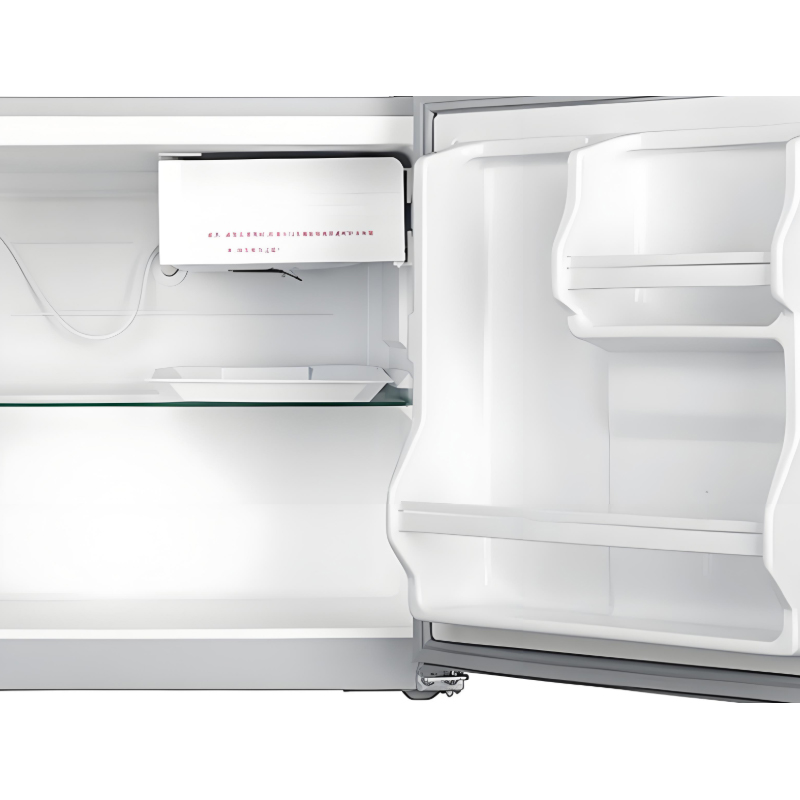 HIPS Casing Sheet for RefrigeratorVacuum-formable HIPS sheet offering rigidity, impact resistance and low-temperature stability, ideal for refrigerator liners and appliance housings that demand dimensional consistency.View Product →
Food trays, containers and service packaging
Deli containers, bakery trays, dairy lids and produce trays are another stronghold. HIPS is economical at packaging volumes, forms precise cavities that present food neatly, and integrates with the sealing and printing steps of modern filling lines. Confirm food-contact compliance for your specific grade at the quotation stage, not after tooling.
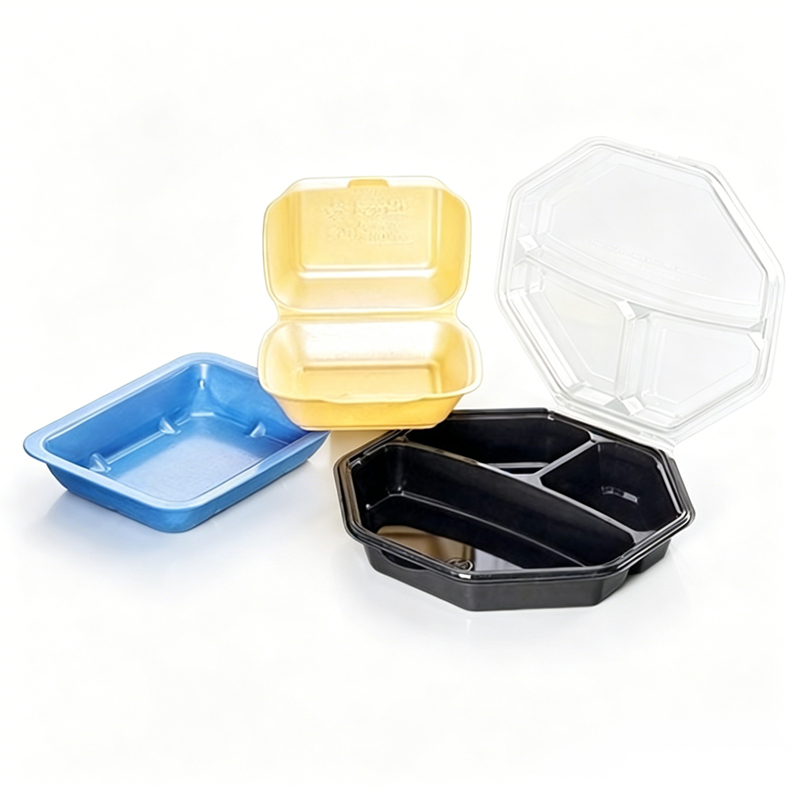 HIPS Food ContainersThermoformable, low-odor HIPS trays for deli containers and produce packaging, combining rigidity with economy for high-volume food packaging applications.View Product →
Toys, building blocks and everyday goods
Toy panels, construction-block sets and household goods lean on HIPS for the same reasons appliance makers do: it punches and die-cuts cleanly, carries saturated colors and keeps edges smooth. Consistency matters most here — a toy line running across hundreds of thousands of units cannot tolerate shifting shades between batches.
Retail displays, signage and printed graphics
Printable and corona-treated grades accept screen, digital and UV printing directly, which is why HIPS fills point-of-purchase stands, shelf talkers, exhibition panels, stencils and die-cut lettering. It prints crisply, cuts into custom silhouettes and costs little enough to refresh with every campaign.
Automotive interiors and protective component packaging
In automotive supply chains HIPS appears twice: as formed interior components needing a rigid matte surface, and as vacuum-formed returnable trays that protect painted or machined parts between plants. One dinged door handle costs more than the tray it shipped in, which is why packaging engineers take sheet impact performance seriously.
Built for the Thermoformer: Processing and Fabrication
If your process is vacuum forming, HIPS sits close to ideal feedstock. The forming window is wide — sheet softens roughly between 120 and 170°C depending on gauge and grade — so a slightly imperfect oven still yields good parts. The sheet stretches uniformly, reproduces fine mold texture and holds crisp corners on a sensibly designed tool.
Downstream fabrication is equally forgiving: HIPS saws, routes, punches and die-cuts cleanly, solvent-bonds and hot-air welds reliably, and takes screen or UV printing after simple surface preparation.
Four shop-floor rules prevent most forming defects:
- Store sheets dry and at room temperature; moisture or a cold sheet returns as bubbles and poor draw.
- Heat in zones and keep gloss surfaces clear of overheated elements to avoid shine marks and scorch.
- Allow roughly 0.4–0.8% tool shrinkage, and confirm the figure against your supplier's grade data.
- Trim with sharp tooling; dull blades leave stress-whitened edges that buyers read as defects.
Specifying Thickness, Color, Texture and Size
Most HIPS disappointments trace back to specification gaps rather than the material itself, and thickness comes first because it controls stiffness, draw depth, weight and cost at once:
| Thickness | Typical applications | Practical notes |
|---|---|---|
| 0.5–1.0 mm | Refrigerator liners, dairy lids, printed display panels | Die-cuts cleanly; watch handling scratches on gloss surfaces |
| 1.0–2.5 mm | Food trays and containers, toy components, returnable packaging trays | The workhorse band for vacuum forming |
| 3.0–6.0 mm | Semifinished stock for machining, kiosk builds, templates | Rigid enough to screw and bond; routs like light hardwood |
Color, texture and size are negotiable when you buy directly from a manufacturer. MCH Technology extrudes HIPS to custom colors matched to your standard, custom gauges, matte, gloss or embossed surface patterns, and custom sheet sizes that cut trimming waste downstream. Fix the color standard, its tolerance and the measurement method in the purchase agreement before the first full run — batch-to-batch color drift causes more disputes than almost any other sheet property.
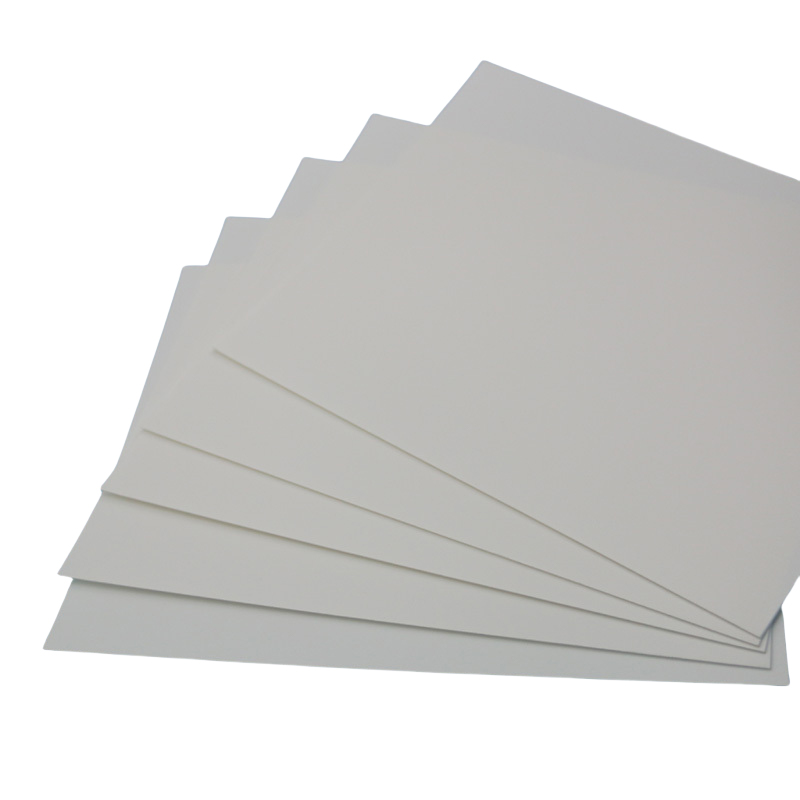 HIPS Semi-Finished SheetsRigid, tough HIPS sheets in 0.5–10 mm thickness with custom colors and finishes, suited to thermoforming, punching and indoor applications where cost and formability matter.View Product →
How HIPS Stacks Up Against ABS and HDPE
HIPS shares catalog space with ABS and HDPE, and the three overlap enough to confuse first-time buyers. The honest summary: pick HIPS when indoor rigidity, formability and cost lead the project; step up to ABS when heat resistance and toughness must climb; choose HDPE when chemicals or weather dominate the requirement.
| Criterion | HIPS | ABS | HDPE |
|---|---|---|---|
| Continuous service temperature | ~60–65°C | ~75–85°C | ~65–80°C |
| Impact resistance | Good | Very good | Very good |
| Thermoforming ease and detail | Excellent | Very good | Moderate |
| Outdoor weatherability | Poor | Poor to fair | Excellent |
| Chemical resistance | Limited | Moderate | Excellent |
| Printing and bonding | Very good with preparation | Very good | Needs surface treatment |
| Relative cost | Lowest | Mid-range | Low to mid |
When an application sits at the edge of HIPS territory — higher temperatures, heavier structural loads, stricter flammability targets — our practical guide to ABS sheet properties, thickness options and buying decisions explains when the upgrade pays for itself.
Limitations Worth Raising Before You Order
The price advantage comes with real constraints, and a responsible supplier states them up front rather than letting you discover them in the field:
- Indoor duty in most cases: polystyrene yellows and embrittles under UV light, so uncovered outdoor parts are the wrong application.
- A modest heat ceiling: above roughly 60–65°C in continuous service, parts creep and distort, ruling out hot-fill packaging and heat-adjacent locations.
- Combustibility: standard grades burn. Where flammability standards apply — appliance and electronics enclosures, transport interiors — qualify a suitable flame-retardant grade before design freeze.
- Limited chemical resistance: some solvents, oils and aggressive cleaners cause crazing or stress cracking, so test your actual cleaning chemistry on finished parts.
A Final Checklist Before You Commit
Run through seven questions before releasing a production order: maximum service temperature and exposure time; indoor or outdoor placement; food-contact or other compliance needs; deepest draw and tightest corner radius; decorating method; thickness tolerance and flatness; and the color standard with its acceptable batch variation. An hour spent here prevents the costliest class of sheet failure — the mismatch discovered after the forming tool has already been cut.
For further material background, our overview of HIPS rigidity and processability expands on grade selection, and the industry news library covers the wider ABS, ASA/ABS, HDPE and PMMA/ABS sheet families.
MCH Technology manufactures HIPS and complementary engineering plastic sheets on three production lines, with deep customization across color, thickness, pattern and size and steady delivery to customers across Europe, the Americas, Southeast Asia and the Middle East. Share your part drawings and service conditions; our technical team will recommend the right grade and gauge — and say so candidly when a different material would serve you better.
Related products

GET A QUOTE
Copyright © Jiangsu Mingchanghe Technology Co., Ltd. All Rights Reserved Engineering Plastic Sheets Manufacturers
