

 English
 中文简体
 Español


Jiangsu Mingchanghe Technology Co., Ltd.
Jiangsu Mingchanghe Technology Co., Ltd.
Jiangsu Mingchanghe Technology Co., Ltd.
Jiangsu Mingchanghe Technology Co., Ltd.
Jiangsu Mingchanghe Technology Co., Ltd.
Jiangsu Mingchanghe Technology Co., Ltd.
Jiangsu Mingchanghe Technology Co., Ltd.
Jiangsu Mingchanghe Technology Co., Ltd.
Jiangsu Mingchanghe Technology Co., Ltd.
Jiangsu Mingchanghe Technology Co., Ltd.
Jiangsu Mingchanghe Technology Co., Ltd.
Jiangsu Mingchanghe Technology Co., Ltd.
Jiangsu Mingchanghe Technology Co., Ltd.
Jiangsu Mingchanghe Technology Co., Ltd.
Jiangsu Mingchanghe Technology Co., Ltd.
27 Oct 2026, Posted by MCH
HIPS Plastic Sheets: Property Data, Grades, Applications and Buying Checklist
Content
- 1 What HIPS Plastic Sheet Actually Is
- 2 HIPS Sheet Property Data at a Glance
- 3 HIPS vs ABS vs PP: What the Specification Should Weigh
- 4 Where HIPS Sheets Earn Their Place
- 5 Limits You Should Design Around
- 6 A Practical Buying Checklist
- 7 Sourcing HIPS Sheet With the Right Support
- 8 Frequently Asked Questions
A 2 mm HIPS sheet costs less than the same gauge in ABS, thermoforms around 130 to 150 degrees Celsius with very little residual stress, and holds a high-gloss surface that takes print, lamination and hot stamping cleanly. That combination is why refrigerator liners, deli trays and point-of-sale displays are built on it. The catch is that HIPS is not a drop-in substitute for ABS in every position: it softens earlier, it crazes on contact with hydrocarbon solvents, and it yellows outdoors unless a protective cap layer is co-extruded over the surface. This guide lays out the property window, the failure modes and the purchase-order details that decide whether a HIPS order runs cleanly or ends with a pallet of cracked trays.
Quick answer: HIPS plastic sheet is a rubber-toughened polystyrene with roughly 5 to 12 percent polybutadiene, a density near 1.05 g/cm3 and a heat deflection temperature of about 70 to 85 degrees Celsius. It is bought for cost, gloss and forming latitude, not for heat or solvent resistance.
What HIPS Plastic Sheet Actually Is
HIPS is a two-phase material: a polystyrene matrix with rubber grafted into it and dispersed as particles a few micrometres across. The rubber phase absorbs impact energy, which turns a glassy, brittle polymer into sheet that can be sawed, routed, drilled and deep drawn without shattering.
Definition: HIPS plastic sheet is an extruded, rubber-modified polystyrene supplied opaque, usually from 0.5 mm to 8 mm thick. It sits between crystal polystyrene, which is clearer but brittle, and ABS, which is tougher and more heat resistant but costs more per kilogram.
Crystal polystyrene is cheap and dimensionally steady, but a dropped tool will crack it. Adding the rubber phase multiplies notched impact strength several times over and slightly reduces stiffness. Because HIPS is naturally opaque, colouring is straightforward: white, black and matched shades are routine rather than special-order work.
- General purpose and high gloss sheet for displays, signage and light boxes
- Matte or low-gloss sheet that hides scuffs on appliance and automotive interior parts
- Antistatic and ESD grades in the 10^6 to 10^9 ohm per square range for tray and electronics packaging
- Flame retardant compounds reaching UL94 V-0, with halogen-free options worth confirming in writing
- Food contact grades meeting FDA 21 CFR 177.1640 and EU Regulation 10/2011, supplied with migration documentation
The processing window is wide, which is why converters keep specifying it. Our notes on how HIPS behaves during thermoforming cover draw ratios, oven zones and cooling in more detail.
HIPS Sheet Property Data at a Glance
Expect the following ranges from a controlled extrusion line. Ask for the mill certificate with every lot, because impact strength moves with rubber content and regrind ratio more than any other property.
| Property | Typical range | What it means for a part |
| Density | 1.04 to 1.06 g/cm3 | Close to ABS, so part weight barely changes when you switch material |
| Tensile strength at yield | 20 to 30 MPa | Stiff enough for panels and shelves, not for structural brackets |
| Flexural modulus | 1.6 to 2.2 GPa | Holds shape in flat work; add ribs when a span passes 400 mm |
| Notched Izod impact | 60 to 110 J/m | Survives handling and a single drop, not repeated hammering |
| Heat deflection at 0.45 MPa | 70 to 85 degrees Celsius | Keep continuous load below roughly 60 degrees Celsius |
| Vicat softening point | 88 to 98 degrees Celsius | Short excursions are tolerable; steam cleaning is not |
| Water absorption, 24 hours | Below 0.1 percent | Dimensionally stable in humid stores and wash-down areas |
| Moulding shrinkage | 0.4 to 0.7 percent | Allow for it in deep-draw tooling and trim fixtures |
HIPS vs ABS vs PP: What the Specification Should Weigh
HIPS is the cheapest of the three per kilogram and the most forgiving to form, ABS is the tougher and hotter-running option, and polypropylene wins on chemical resistance and flex fatigue.
HIPS holds the advantage
- 20 to 30 percent lower cost per kilogram than ABS at equal gauge
- Higher gloss straight from the die, with no secondary polishing step
- Lower forming temperature and a wider oven window
- Cleaner printing and lamination on a co-extruded cap layer
- Food contact grades stocked as standard by most extruders
ABS holds the advantage
- Impact strength two to three times higher at the same thickness
- Heat deflection 15 to 25 degrees Celsius higher
- Resistance to oils, fuels and many cleaning solvents
- Better choice for load-bearing trim and structural housings
- ASA-capped ABS keeps colour outdoors for years
Polypropylene becomes the better answer when a part meets hydraulic oil, aggressive cleaners or repeated flexing, as in a living hinge. It is softer, harder to bond, and takes printing poorly without surface treatment, so the switch is rarely free.
Where HIPS Sheets Earn Their Place
Five applications account for most HIPS sheet volume: refrigerator liners and casings, thermoformed food packaging, display and signage work, rigid consumer goods, and antistatic trays for electronics.
- Refrigerator liners, door panels and crisper casings in 1.5 to 4.0 mm high-gloss food contact sheet, deep drawn at ratios up to 2:1
- Food containers, cups and deli trays in 0.5 to 1.5 mm sheet, vacuum formed or pressure formed
- Point-of-sale displays, signage and light boxes in 1 to 3 mm sheet with a gloss or matte cap
- Toys, building blocks and household items in 1.5 to 3 mm sheet, painted or printed after forming
- Antistatic trays and electronic packaging in 0.8 to 2 mm sheet within the 10^6 to 10^9 ohm per square range
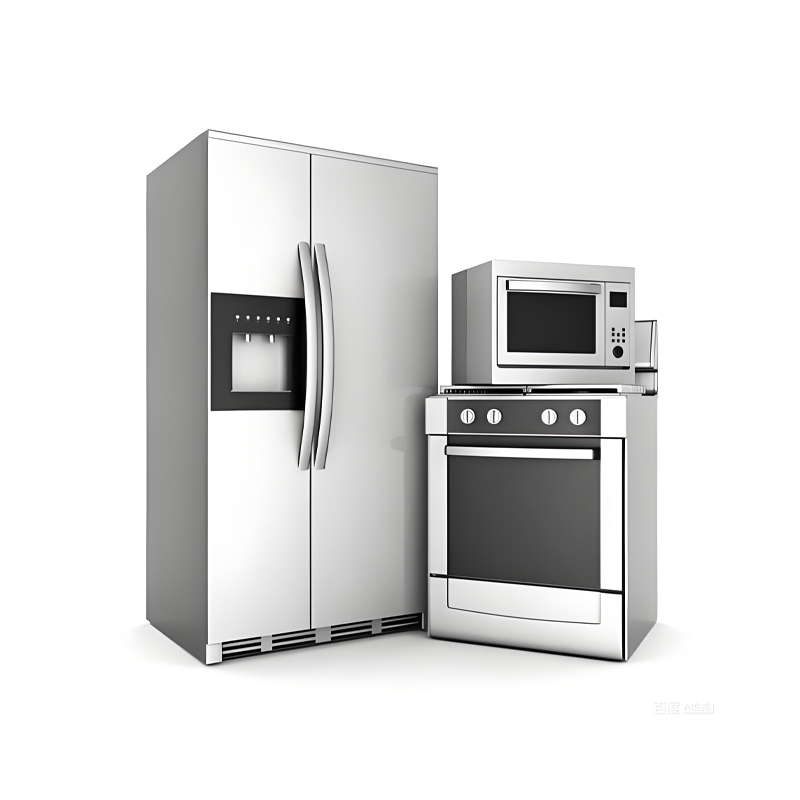
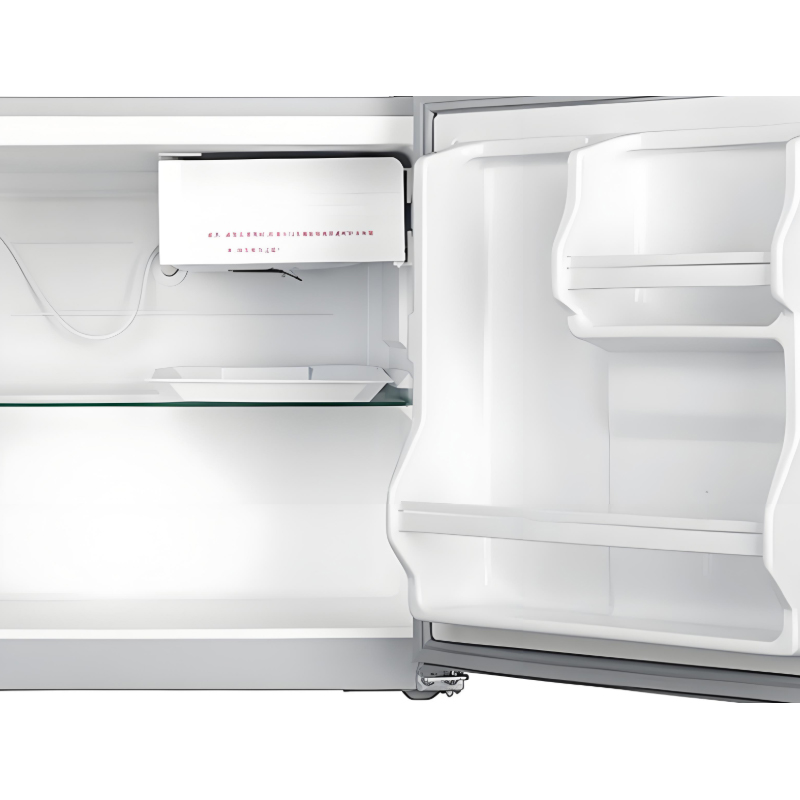 HIPS Casing Sheet for Refrigerator and Appliance HousingsDeveloped for refrigerator casings and similar appliances, this HIPS sheet offers rigidity, impact resistance and thermoforming suitability for durable housings.View Product →
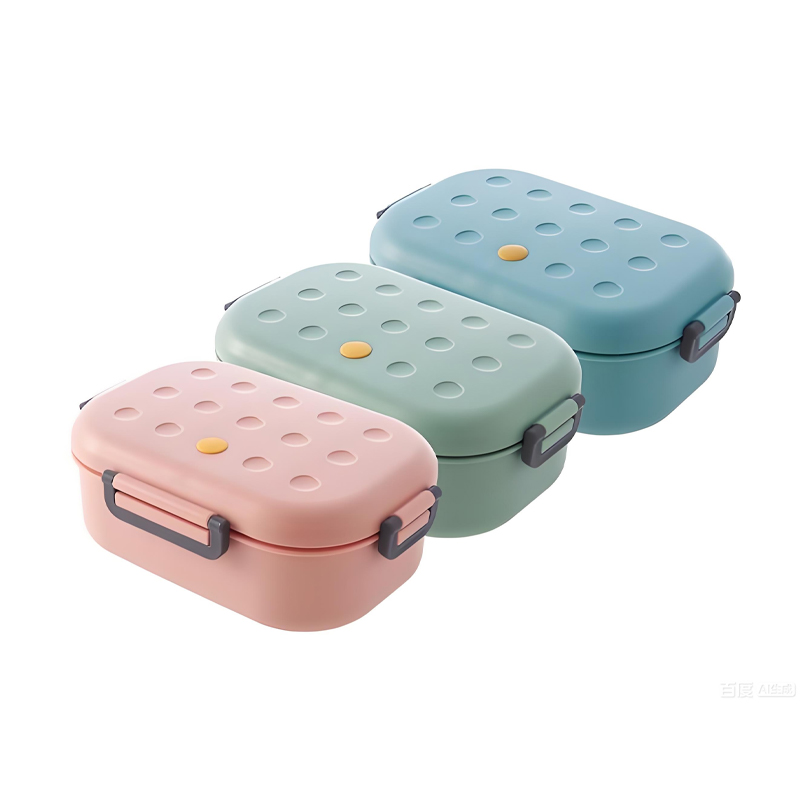
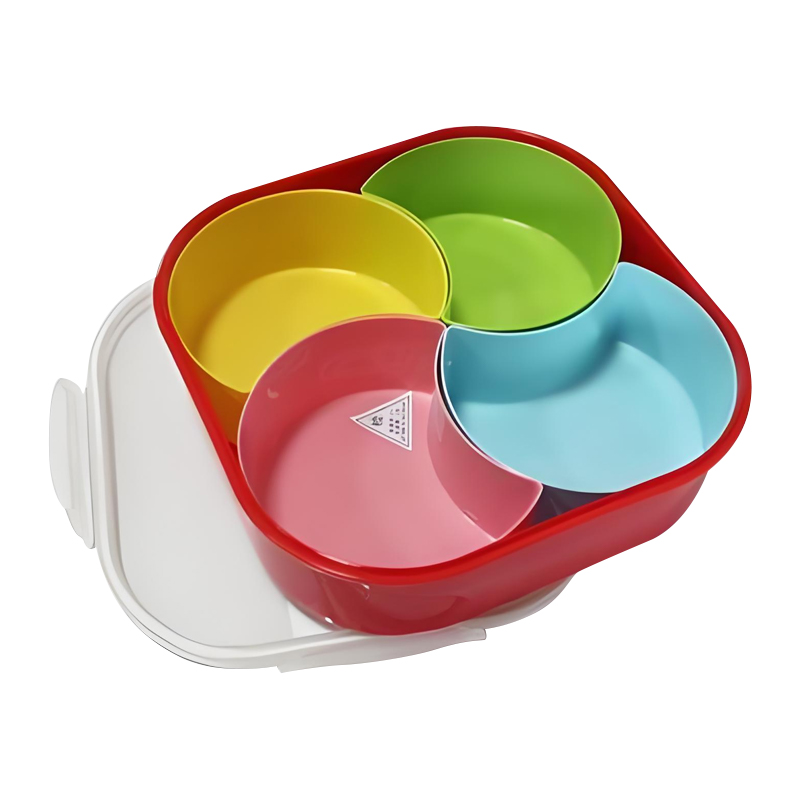
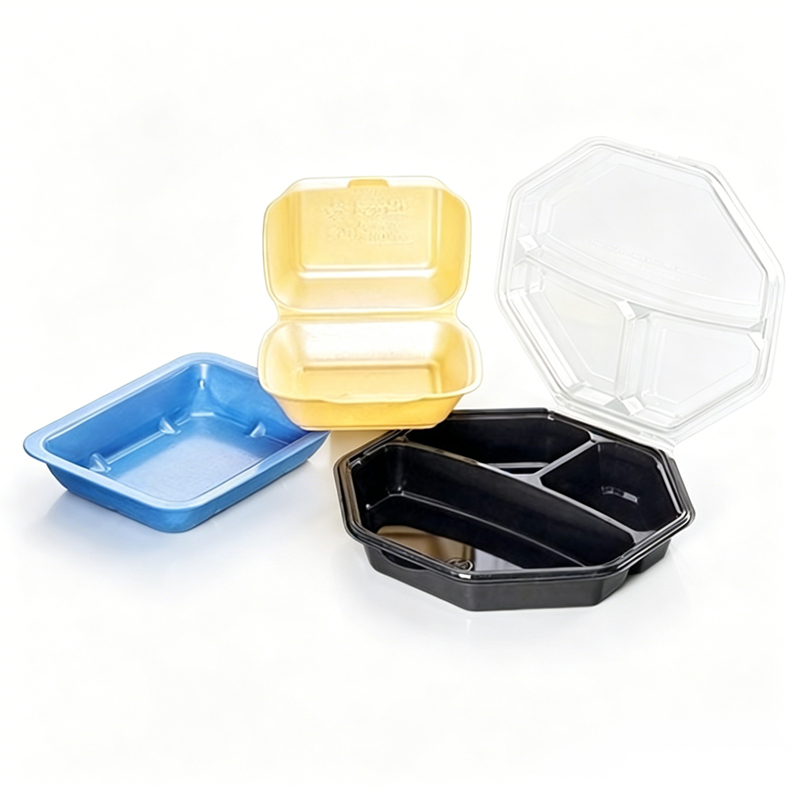 HIPS Food Containers for Egg and Fruit TraysDesigned for food packaging such as egg and fruit trays, these HIPS containers combine rigidity, impact resistance and thermoforming compatibility for protective display.View Product →
The full HIPS sheet range covers gloss, matte, antistatic and flame retardant options, with colour, thickness, pattern and sheet size made to order rather than picked from a fixed stock list.
Limits You Should Design Around
HIPS fails in three predictable ways: sustained load above about 70 degrees Celsius, contact with hydrocarbon solvents and adhesives, and outdoor exposure without a protective cap.
- Heat: a continuous service ceiling near 60 degrees Celsius applies under load; a 2 mm panel will warp close to a heat source or inside a closed vehicle cabin.
- Solvents: white spirit, toluene and many solvent-based inks and adhesives cause crazing and stress cracking. Use water-based or UV inks, and test any adhesive on an offcut before running the batch.
- UV: unstabilised HIPS chalks and yellows within a season outdoors. An acrylic cap extends service life, but it does not turn the sheet into a structural outdoor material.
- Creep: deflection grows under constant load. Add ribs, increase gauge, or move to ABS or PC/ABS where a part must carry weight permanently.
A Practical Buying Checklist
Five items on the purchase order decide whether the delivered sheet runs cleanly on your line or wastes a shift in setup.
- Thickness and tolerance. State nominal plus a band: 1.5 mm plus or minus 0.08 mm, and 3 mm plus or minus 0.12 mm are common commercial figures. Tighter bands cost more, so match them to the forming draw, not to habit.
- Regrind content. Ask for the percentage in writing. Above roughly 20 to 25 percent regrind, impact strength and colour consistency begin to drift between lots.
- Cap layer and gloss. Confirm whether one side or both are capped, and define the target with a gloss unit reading at 60 degrees rather than a verbal description of shiny or matt.
- Flatness and camber. Specify a maximum deviation in millimetres per metre and agree on storage on edge, because a bowed sheet will misregister in the trim fixture.
- Masking film and packing. Protective film must peel without leaving residue after weeks in a warm warehouse, and export pallets need edge protection to avoid transit scuffing.
Sourcing HIPS Sheet With the Right Support
Buy from a supplier that extrudes the sheet rather than one that only cuts it, because thickness, colour and cap layer have to be held on the line for the whole run.
Three extrusion lines running ABS, HDPE, HIPS and alloy sheet
Colour, thickness, pattern and sheet size built to drawing
Export to Europe, the Americas, Southeast Asia and the Middle East
Jiangsu MCH Technology Co., Ltd. supplies HIPS sheet alongside ABS, HDPE, PC/ABS, ASA/ABS, TPU/ABS and PMMA, with technical and sales teams handling specification questions from the first sample through to repeat orders.
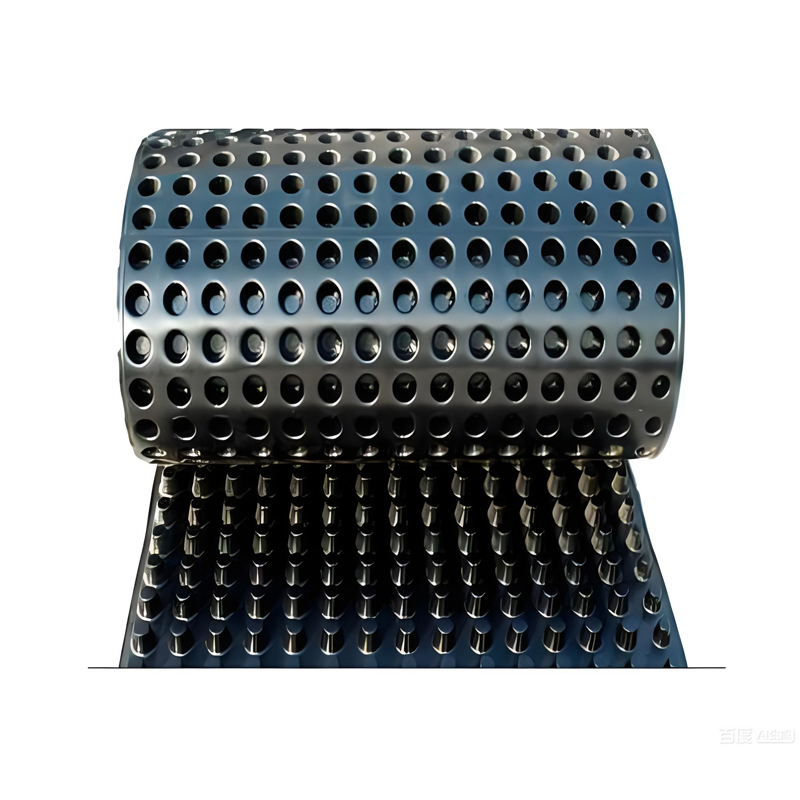
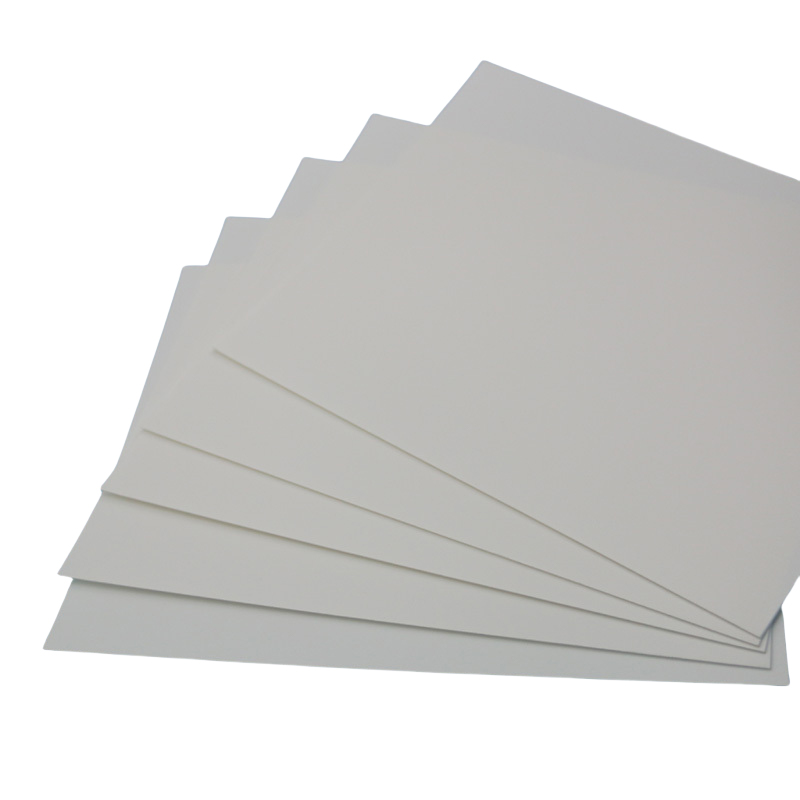 HIPS Semi-Finished Sheets in Standard DimensionsSemi-finished HIPS sheet stock in 2440 mm by 1220 mm sheets and 0.5–10 mm thickness, with custom color and processability for cutting, punching and thermoforming.View Product →
Frequently Asked Questions
Is HIPS sheet food safe?
Food contact grades meet FDA 21 CFR 177.1640 and EU Regulation 10/2011, and are supplied with migration documentation. Confirm the grade for fatty or acidic foods specifically, since those conditions are tested separately.
Can HIPS sheet be thermoformed and machined?
Yes. The sheet forms between roughly 130 and 150 degrees Celsius and handles draw ratios near 2:1. It saws, routes and drills with sharp tooling; keep the feed rate high and clear chips so friction does not melt the cut edge.
How thick can HIPS sheet be supplied?
Standard production runs from 0.5 mm to 8 mm. Availability narrows above 6 mm because cooling time and stress control become critical, so thicker gauges are usually quoted as a custom run.
Does HIPS sheet yellow outdoors?
Unstabilised sheet does, typically within one outdoor season. A co-extruded acrylic or ASA cap slows the change and protects the gloss, but ABS or ASA sheet remains the better choice for parts that live outside permanently.
Related products

GET A QUOTE
Copyright © Jiangsu Mingchanghe Technology Co., Ltd. All Rights Reserved Engineering Plastic Sheets Manufacturers
