

 English
 中文简体
 Español


Jiangsu Mingchanghe Technology Co., Ltd.
Jiangsu Mingchanghe Technology Co., Ltd.
Jiangsu Mingchanghe Technology Co., Ltd.
Jiangsu Mingchanghe Technology Co., Ltd.
Jiangsu Mingchanghe Technology Co., Ltd.
Jiangsu Mingchanghe Technology Co., Ltd.
Jiangsu Mingchanghe Technology Co., Ltd.
Jiangsu Mingchanghe Technology Co., Ltd.
Jiangsu Mingchanghe Technology Co., Ltd.
Jiangsu Mingchanghe Technology Co., Ltd.
Jiangsu Mingchanghe Technology Co., Ltd.
Jiangsu Mingchanghe Technology Co., Ltd.
Jiangsu Mingchanghe Technology Co., Ltd.
Jiangsu Mingchanghe Technology Co., Ltd.
Jiangsu Mingchanghe Technology Co., Ltd.
23 Oct 2026, Posted by MCH
PMMA Sheets: Cast vs Extruded, Tolerances, Masking and Annealing Checks
Content
- 1 What Are PMMA Sheets?
- 2 Cast or Extruded: Which PMMA Sheet Fits the Job?
- 3 Which Numbers on a PMMA Datasheet Change the Design?
- 4 Where PMMA Sheets Earn Their Place
- 5 Customising PMMA Sheets Without Buying a Supply Problem
- 6 A Practical Buying Checklist for PMMA Sheet Orders
- 7 PMMA Sheet Questions Buyers Ask
Two suppliers quote the same 3 mm clear acrylic sheet and one lands 15 percent cheaper. The gap rarely comes from margin. It comes from the sheet being extruded instead of cast, with a gauge tolerance of +/-0.1 mm instead of +/-0.4 mm, a far shorter polymer chain, and different behaviour the moment the panel is cut, printed or bent into a sign return.
Buyers who treat PMMA sheet as one product end up comparing prices from two different datasheets. The variables that decide the outcome are polymer route, thickness tolerance, optical class, masking and annealing. Once those five sit in the purchase order, the price conversation turns technical, which is where it belongs.
The lowest acrylic quote is usually a different material, not a better deal.
What Are PMMA Sheets?
PMMA sheets are flat panels of polymethyl methacrylate, a transparent thermoplastic with light transmission up to 92 percent and a density of 1.19 g/cm3, roughly half the weight of glass at the same thickness.
PMMA sheet is the technical name for acrylic sheet: a rigid, optically clear thermoplastic supplied flat in thicknesses from 1 mm to over 100 mm, produced either by cell casting between glass plates or by continuous extrusion.
1.19Density, g/cm3
92%Light transmission
1.49Refractive index
105 CSoftening range
Both routes start from the same monomer, but they do not deliver the same sheet. Cell casting polymerises MMA slowly inside a mould and yields a high molecular weight material with low internal stress. Extrusion melts pelletised PMMA and pushes it through a die, which buys tighter gauge control and a lower cost per square metre at the price of a shorter polymer chain.
Grades branch out from there: standard optical grades for glazing and display, UV-stabilised grades for outdoor service, impact-modified and flame-retardant versions that trade some clarity for safety performance, plus alloy grades for parts that must survive impact. PMMA can also be depolymerised back to MMA monomer, so clean offcuts keep real value instead of going to landfill.
Cast or Extruded: Which PMMA Sheet Fits the Job?
Cast PMMA sheet is the right choice when a panel will be machined, polished or deeply thermoformed, while extruded sheet wins on flat, high-volume parts where gauge consistency and cost per square metre decide the order.
| Attribute | Cast PMMA sheet | Extruded PMMA sheet |
| Molecular weight | High, typically above 1,000,000 g/mol | Lower, typically 150,000 to 300,000 g/mol |
| Usual thickness range | 2 mm to 50 mm, special orders beyond 100 mm | 1 mm to 12 mm, rarely above 15 mm |
| Gauge tolerance on 3 mm | Around +/-0.4 mm | Around +/-0.1 mm |
| Optical quality | Very uniform, no flow orientation | Good, may show faint flow lines |
| Thermoforming | High elongation, suits deep draws | Moderate draws, sharper softening window |
| Solvent stress cracking | More resistant after annealing | More sensitive to inks and sanitisers |
| Relative cost | Higher per kilogram | Lower per square metre |
| Typical parts | Sign faces, machined windows, thick glazing | Flat displays, diffusers, point of sale panels |
The tolerance line is where most disputes start. A cast sheet ordered at 3 mm can arrive at 2.7 mm and still meet its standard, which cuts panel stiffness by roughly a quarter and removes several kilos from a large sign face. Extruded sheet holds the number far more tightly but cannot be polished back to the same optical finish.
Rule of thumb: if the panel will be bent, milled or flame polished into a visible part, specify cast. If it will be cut flat and mounted, extruded almost always wins on cost.
Solvent resistance deserves its own line in the specification. Cast sheet handles alcohols, dilute acids and aliphatic hydrocarbons well, but ketones, esters, aromatic and chlorinated solvents attack both routes. Ethanol-based sanitisers and some screen printing inks craze acrylic under stress, which is why annealing before printing is not a detail to skip.
Which Numbers on a PMMA Datasheet Change the Design?
Four values decide whether a PMMA sheet fits: thickness tolerance, light transmission, heat deflection temperature and the coefficient of linear expansion.
Thickness tolerance and fit
Extruded sheet typically holds +/-0.1 mm on a 3 mm gauge, cast sheet +/-0.4 mm. For a framed panel the looser figure is acceptable; for a machined spacer, a snap fit or a stacked light guide it is not, and the drawing should call out a measured range rather than a nominal number.
Thermal movement and clearance
PMMA expands by about 0.00007 mm per mm per kelvin, close to seven times the movement of glass. A 2 m panel facing a 40 C swing needs roughly 5 mm of total clearance across its width, so a rebate that grips the sheet in summer will crack it in winter.
Mass on the frame
At 5 mm thickness, PMMA weighs 5.95 kg per square metre, polycarbonate 6.0 kg and soda-lime glass 12.5 kg. Halving panel weight changes the subframe, the fixings and sometimes the whole mounting detail.
Heat deflection sets the service ceiling: standard PMMA sheet carries load to roughly 85 C to 100 C and softens near 105 C, so a sign face above a hot roofline or a lens next to a lamp needs that figure checked before the drawing is released.
Where PMMA Sheets Earn Their Place
PMMA sheet is specified where light transmission, surface hardness and UV stability matter more than impact strength, which covers signage, architectural glazing, vehicle windows, medical housings and optical components.
- Signage and light boxes: cast sheet at 92 percent transmission and low haze keeps edge-lit letters even, and its surface hardness resists scratching during handling and cleaning.
- Architectural glazing and skylights: UV-stabilised grades hold clarity for a decade outdoors and weigh half as much as glass.
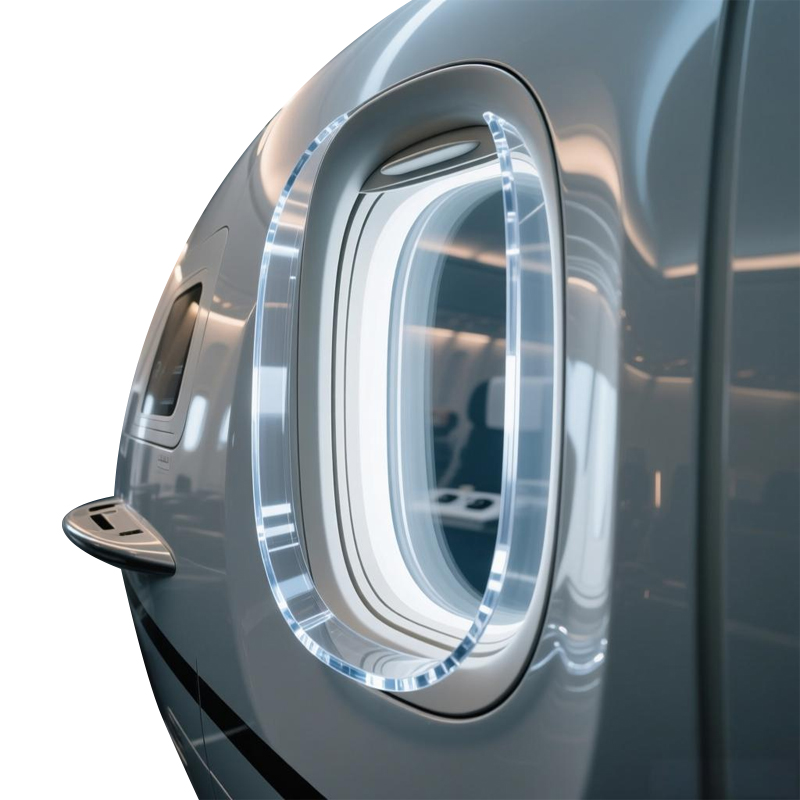
- Vehicle and aircraft windows: cast sheet machines and polishes to optical flatness for portholes, side windows and interior trim.
- Medical housings and consumables: BPA-free grades serve incubator hoods, cuvettes and equipment covers, though alcohol disinfectants must be checked for crazing.
- Optical parts: lenses, light guides and display covers lean on the 1.49 refractive index and moulding quality of optical grades.
PMMA against polycarbonate decides most outdoor and machine-guard projects, and the two materials are rarely interchangeable.
PMMA sheet wins when
- Clarity above 90 percent drives the design
- UV stability over ten years is required
- Surface hardness matters against cleaning
- Weight saving against glass pays for the frame
Polycarbonate wins when
- Impact or vandal resistance is the priority
- Machine guards and security glazing are specified
- The part sees sustained heat above 110 C
- Flame-retardant grades are mandatory
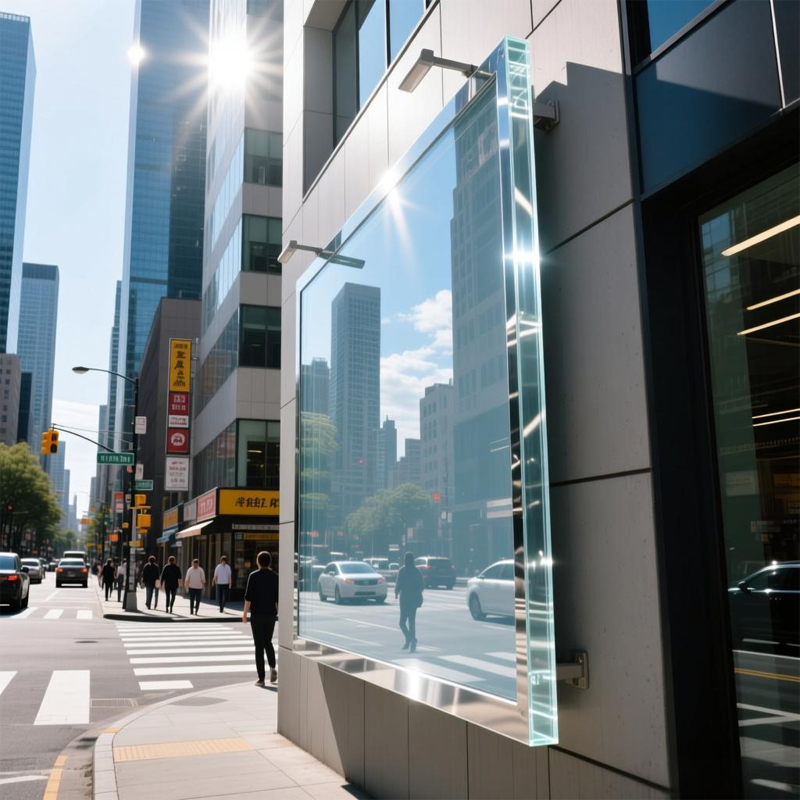 PMMA Acrylic Sheets for Advertising and Signage DisplaysFor signage projects weighing PMMA against polycarbonate, this high-clarity acrylic sheet supports bright indoor and outdoor displays and is easy to cut, drill or thermoform.View Product →
Signage remains the largest single outlet. A light box face needs transmission and diffusion in the right balance, and a 3 mm cast sheet with 92 percent transmission and low haze reads cleaner at the edge than a cheaper diffuser grade carrying the same nominal transparency.
On a light box, brightness is a system result: sheet transmission, LED pitch and box depth matter more than the acrylic brand printed on the invoice.
Customising PMMA Sheets Without Buying a Supply Problem
PMMA sheet is customised on four axes, thickness, colour, surface texture and cut size, and each one adds either lead time or a quality risk that belongs in the price before the order is released.
Colour and light transmission
Mass-tinted sheet holds colour through the thickness and can be re-polished; coated sheet cannot. For translucent or opal grades, specify a transmission band rather than a colour chip, because pigment loading moves both colour and diffusion from batch to batch.
Texture and surface
Extruded sheet takes matte, prismatic and fine-texture finishes from an embossed roll; cast sheet is textured in the mould or sandblasted afterwards. A matte finish hides handling marks on a vertical display panel but collects dust on a horizontal one.
Masking, storage and annealing
Polyethylene film suits outdoor and long-storage orders, while paper masking needs a dry store and can leave adhesive behind after a humid summer. Machined or printed parts should be annealed at about 80 C for an hour per 3 mm of thickness and cooled slowly, which removes the stress that turns a solvent wipe into a crack.
Where a part needs gloss and impact strength together, a PMMA/ABS alloy often beats a thicker acrylic panel; this PMMA/ABS sheet comparison explains how the two polymers behave in thermoforming and scratch testing.
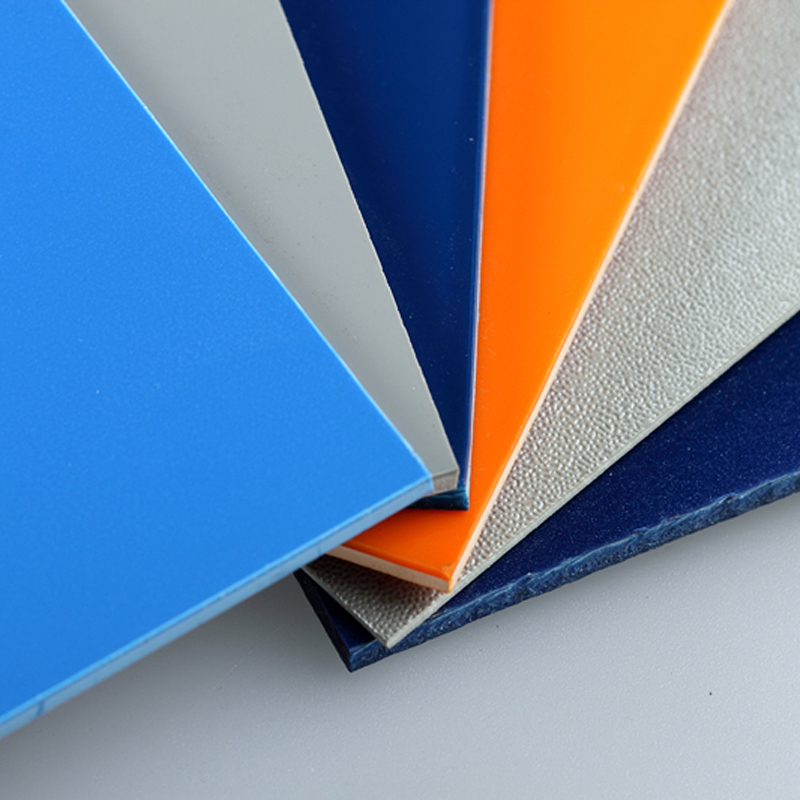 Custom PMMA Acrylic Semi-Finished Sheets for SignageFor display projects needing gloss, impact resistance and custom colour or thickness, this acrylic sheet supports signage, exhibition and light-box work.View Product →
Customisation is cheap at the drawing stage and expensive after the sheets are cut, so every deviation from the standard sheet deserves a signed sample.
Suppliers with in-house compounding and several casting or extrusion lines can hold colour and gauge across repeat orders. Jiangsu MCH Technology, for example, produces PMMA and ABS sheet families with colour, thickness, pattern and size supplied to order. The question worth asking any supplier is not whether they can customise, but which parameters they control in-house and which they subcontract.
A Practical Buying Checklist for PMMA Sheet Orders
Six checks catch nearly every PMMA sheet problem before the material leaves the supplier.
- Name the polymer route. Write cast or extruded on the enquiry, not acrylic sheet, or the quotes will describe different materials.
- Put the gauge tolerance in the purchase order. A nominal thickness alone allows a 3 mm line to ship at 2.7 mm.
- Set the optical class and haze limit. Transmission, haze and the colour temperature of the light source should all be agreed before sampling.
- Agree masking and interleaving. Film type, adhesive and whether sheets are paper-interleaved affect storage life and laser cutting.
- Ask about annealing after machining. Stress relief is invisible on delivery and decisive in service.
- Confirm UV stabilisation and keep a retained sample. Outdoor grades should arrive with a performance statement, and a signed sample settles colour disputes months later.
A quote 20 percent below the field rarely reflects a better machine. It usually reflects a different gauge, a different polymer route or a thinner masking film.
PMMA Sheet Questions Buyers Ask
Are PMMA sheets the same as acrylic sheets?
Yes. PMMA is the polymer name and acrylic is the everyday trade description, so a supplier selling clear acrylic sheet is selling PMMA unless the panel is polystyrene or polycarbonate. Ask for the material designation on the datasheet to be certain.
How thick can PMMA sheet be made?
Cell cast sheet is routinely produced from 2 mm to 50 mm and can go beyond 100 mm on special orders, while extruded sheet usually stops between 1 mm and 12 mm. Above 15 mm, casting is effectively the only route.
Do PMMA sheets yellow outdoors?
UV-stabilised PMMA keeps its clarity for ten years and more in most climates and holds colour better than polystyrene or unstabilised polycarbonate. Sheet sold without a UV statement will yellow and embrittle within a few seasons.
Can PMMA sheet be laser cut?
Yes, and cast sheet cuts with a cleaner, more polishable edge than extruded. Keep protective film off the cut line where possible, extract the vapour, and anneal stressed parts afterwards if they will meet solvents or carry load.
PMMA sheet rewards a specification written around the process rather than around the price. Polymer route, gauge tolerance, optical class, masking and annealing decide how a panel behaves in the frame, the light box or the machining centre, and all five are settled long before the delivery note is signed.
Start with the part, work back to the sheet, and the quote comparison becomes a technical conversation instead of a race to the bottom.
Related products

GET A QUOTE
Copyright © Jiangsu Mingchanghe Technology Co., Ltd. All Rights Reserved Engineering Plastic Sheets Manufacturers
