

 English
  中文简体
中文简体  Español

Jiangsu Mingchanghe Technology Co., Ltd.
Jiangsu Mingchanghe Technology Co., Ltd.
Jiangsu Mingchanghe Technology Co., Ltd.
Jiangsu Mingchanghe Technology Co., Ltd.
Jiangsu Mingchanghe Technology Co., Ltd.
Jiangsu Mingchanghe Technology Co., Ltd.
Jiangsu Mingchanghe Technology Co., Ltd.
Jiangsu Mingchanghe Technology Co., Ltd.
Jiangsu Mingchanghe Technology Co., Ltd.
Jiangsu Mingchanghe Technology Co., Ltd.
Jiangsu Mingchanghe Technology Co., Ltd.
Jiangsu Mingchanghe Technology Co., Ltd.
Jiangsu Mingchanghe Technology Co., Ltd.
Jiangsu Mingchanghe Technology Co., Ltd.
Jiangsu Mingchanghe Technology Co., Ltd.
03 Sep 2026, Posted by MCH
HDPE Sheets: Key Properties, Common Applications, and How to Choose the Right One
Content
Returnable packaging for automotive components has to survive forklift impacts, constant handling, contact with cutting fluids, and hundreds of washdown cycles, all without splintering, rusting, or contaminating the parts it carries. Requirements like these are why so many engineers reach for HDPE sheets. If your application involves chemicals, moisture, impact, or outdoor exposure, high-density polyethylene sheet is usually the most cost-effective thermoplastic to evaluate first. This article explains what HDPE sheet is, which properties matter in real projects, where it performs best, and how to choose thickness, color, and surface finish before you place an order.
What HDPE Sheets Are
HDPE, short for high-density polyethylene, is a thermoplastic polymer with a density between roughly 0.941 and 0.965 g/cm³. That range is what separates it from low-density polyethylene (LDPE): the tighter molecular structure gives HDPE noticeably higher stiffness, tensile strength, and temperature tolerance while keeping the toughness the polyethylene family is known for.
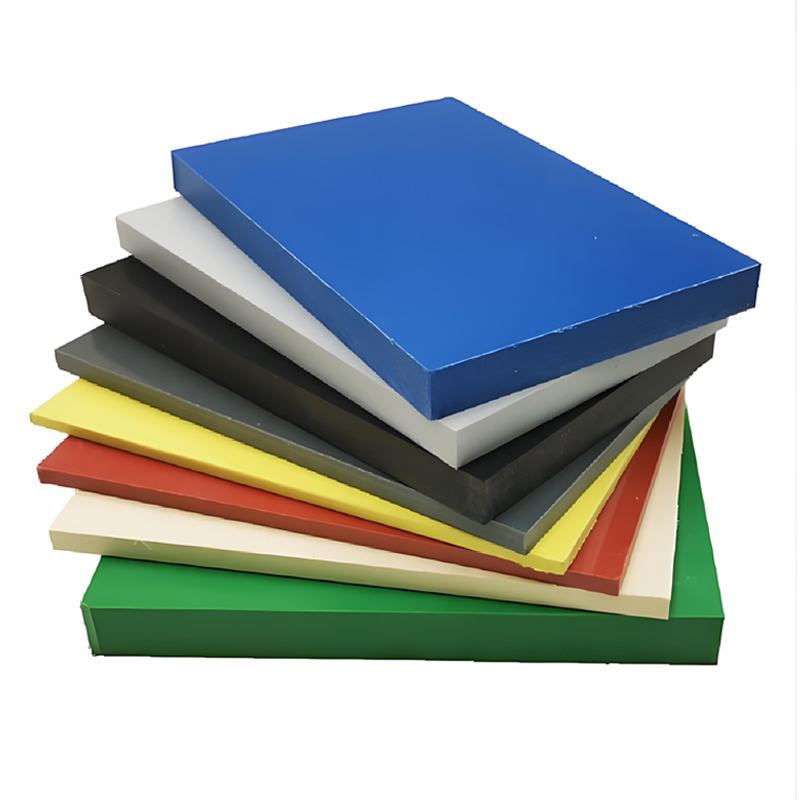
Sheet is produced by melting polyethylene resin, extruding it through a die, and calibrating and cooling it to a controlled thickness. Commercial sheet commonly runs from below 1 mm up to 50 mm or more, in panel sizes such as 1220 x 2440 mm (4 x 8 ft) and larger. Because pigment is compounded into the resin before extrusion, the color runs through the full thickness of the sheet, so scratches and cut edges do not expose a different core.
How HDPE Compares With Other Common Sheet Materials
Against LDPE, HDPE is more rigid and holds its shape under load, which makes it the better choice for trays, panels, and tank walls. Against ABS, HDPE wins on chemical resistance, moisture absorption, and low-temperature toughness, while ABS offers higher stiffness, a glossier surface, and easier painting and gluing. Against acrylic (PMMA), HDPE will not shatter, which is exactly why it replaces brittle materials wherever impact is expected. None of these materials is universally better; the right answer depends on whether your application punishes the sheet chemically, mechanically, or visually.
Key Properties That Matter in Real Projects
Conclusion first: HDPE sheet earns its specification on four points, namely chemical resistance, impact toughness, near-zero moisture absorption, and a wide service temperature window. Its limits are just as important to understand: it softens as temperatures approach 80 °C, and it will creep under sustained load, so it is a lining and enclosure material rather than a structural one.
- Chemical resistance. HDPE withstands most dilute acids, alkalis, and salts, plus many solvents, which is why it is standard for chemical tanks, secondary containment, and fluid-contact components. One caution: under sustained stress, certain detergents and oils can cause environmental stress cracking, so demanding fluid applications deserve a stress-crack-resistant grade.
- Impact toughness. HDPE dents rather than cracks and keeps useful impact resistance at low temperatures, performing in cold-chain storage and winter outdoor conditions where many rigid plastics shatter.
- Moisture and hygiene. Water absorption sits below 0.1 percent, the material does not rot or rust, and smooth sheets wipe clean easily. Food-contact grades and antimicrobial formulations are available for medical and food equipment.
- Wear and low friction. The surface slides well and resists abrasion, making HDPE a dependable liner for chutes, guide rails, and conveyor wear strips.
| Property | Typical Range | What It Means in Practice |
|---|---|---|
| Density | 0.941-0.965 g/cm³ | Lighter than most engineering plastics, lowering freight cost and easing handling |
| Tensile strength | 20-30 MPa | Adequate for trays, liners, and covers; not suitable for structural brackets |
| Continuous service temperature | about -40 °C to +80 °C | Handles outdoor winter and washdown use; avoid engine bays and hot-fill processes |
| Water absorption | Below 0.1% | Dimensional stability in wet environments; no swelling or corrosion |
| Chemical resistance | Excellent against most acids, alkalis, and salts | Suitable for chemical tanks, containment, and fluid-contact parts |
Where HDPE Sheets Earn Their Keep
The pattern across industries is consistent: wherever a part must tolerate impact, chemicals, or water for years without maintenance, HDPE sheet belongs on the shortlist.
Automotive Parts Packaging
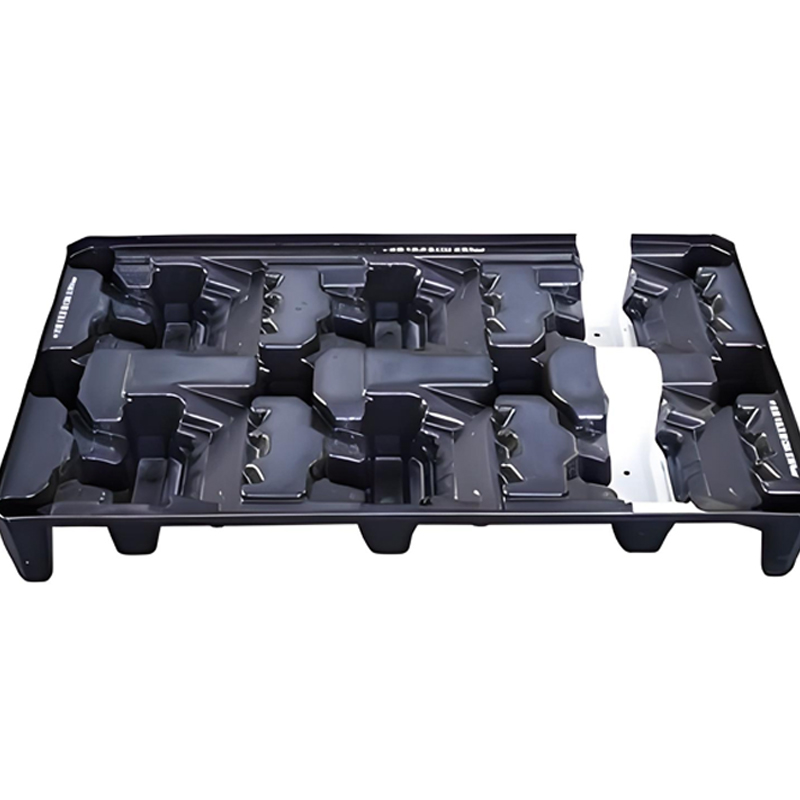
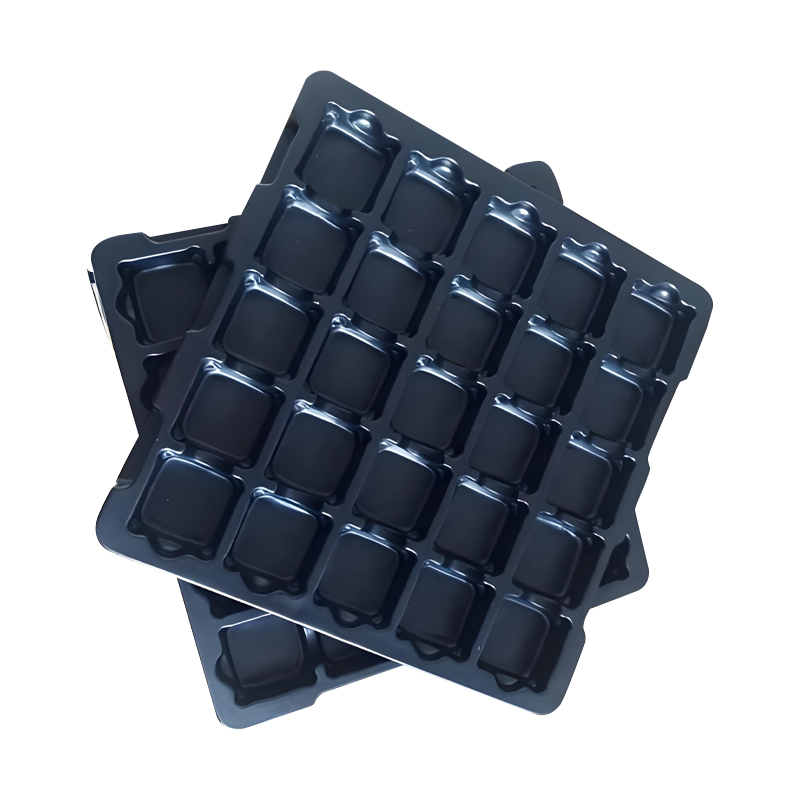
Returnable dunnage, layer pads, and dividers made from HDPE sheet outlast plywood alternatives because they cannot splinter, absorb water, or shed debris onto finished components. Washable surfaces also support the cleanliness standards that tier-one packaging programs demand.
Medical Devices and Laboratory Equipment
HDPE trays, work surfaces, and cabinet liners tolerate repeated cleaning with disinfectants. Antimicrobial grades add another layer of hygiene control for equipment housings and transport cases.
Signage and Advertising
Color-through HDPE sheet with UV stabilization is used for outdoor signs, wayfinding panels, and thermoformed channel-letter backs. Because color is in the material rather than on it, it cannot peel or flake off.
Smart Agriculture and Fluid Handling
Feed and water equipment, greenhouse fittings, and tank linings benefit from HDPE's resistance to moisture, fertilizers, and cleaning chemicals, combined with stability across outdoor temperature swings.
Fabrication, Jigs, and 3D Printing Support
Because HDPE welds readily with matching welding rod, fabricators build tanks, ducting, and custom enclosures from flat sheet. In workshops it also serves as cutting surfaces, jigs, fixtures, and a stable build surface in 3D printing workflows.
How to Choose Thickness, Color, and Surface Finish
Getting the specification right comes down to matching three variables to the environment the sheet will actually face.
Thickness and Support
As a rule of thumb, sheet below 3 mm suits linings, die-cut parts, and laminating; 6 to 12 mm covers trays, sign blanks, and machine guards; 20 mm and above is typical for tank walls and heavy liners. Thickness alone is not enough, though: an unsupported span will sag regardless of gauge, so plan frames or ribs for wide panels.
Color and Weathering
For outdoor use, carbon-black HDPE remains the most weather-resistant option, and UV-stabilized grades in other colors extend service life further. Custom colors are worth requesting for brand-matched packaging or signage, provided the volume justifies a dedicated production run.
Surface Finish and Pattern
Smooth sheet cleans easily and suits chemical contact and washdown zones. Textured or embossed finishes hide scratches, improve grip on handling surfaces, and reduce glare on signage. Confirm the finish during sampling, because it affects both appearance and cleanability.
Sourcing Considerations Before You Buy
Most HDPE disappointments trace back to procurement details rather than the material itself. Before committing to a supplier, work through this list:
- Ask for the datasheet of the exact grade being quoted, not a generic HDPE average, and check melt flow, density, and impact data.
- Confirm whether the sheet is virgin resin or contains regrind. Regrind is acceptable for many non-critical uses but risky for tanks and chemical-contact parts.
- Verify thickness tolerance and flatness, especially for thin, wide panels where warpage shows up in the finished product.
- If you will weld the sheet, confirm weldability and the availability of matching welding rod.
- Check any certifications your market requires, such as food-contact compliance or a specific flame rating, and get them documented.
- For color-critical projects, ask about batch-to-batch color consistency and request a retained sample.
Manufacturers with in-house extrusion lines control these variables more predictably than intermediaries, because they set the resin recipe and run the calibration process themselves. Jiangsu MCH Technology Co., Ltd., an engineering plastic sheet producer with more than thirty years of industry experience, is one example of this model: the company produces HDPE sheet alongside its ABS-family products and supports customization across color, thickness, pattern, and size, exporting to Europe, the Americas, Southeast Asia, and the Middle East. Whatever supplier you choose, the principle is the same: the earlier your supplier sees the real application, the fewer surprises appear in the first shipment.
The Bottom Line
HDPE sheet is the material to specify first when chemicals, moisture, impact, or cold define your application, and the material to reconsider when continuous heat above 80 °C or sustained structural load is involved. Validate the decision with a grade-specific datasheet, order a small trial batch in your exact thickness and finish, and test it in the real working environment before scaling up. That sequence of shortlisting, verifying, piloting, and then scaling is what turns a good general-purpose plastic into a dependable, long-life component.
Related products


GET A QUOTE
Copyright © Jiangsu Mingchanghe Technology Co., Ltd. All Rights Reserved Engineering Plastic Sheets Manufacturers
